|
exclusive news, views and interviews from the world of ecotourism You may use the index and search facility to find older issues. |
||||||||||||
123 Flash Menu Placeholder.
|
||||||||||||
|
|
||||||||||||
|
ISSN 1108-8931 |
INTERNATIONAL ECOTOURISM MAGAZINE™ |
Year 8, Issue 96 - March 2008 |
||||||||||
|
This Issue Sponsored By: |
||||||||||||
|
In this issue: |
|
|||||||||||
|
|
||||||||||||
|
Director’s Cut:
Tourism Without Plastic This
is the title of this years’
ECOCLUB.com Earth Day Photo Competition,
which seeks to examine the problems that plastic creates in various aspects of
Tourism, as well as some innovative solutions to reuse it, reduce it or replace
it. Due to its versatility, cheapness and durability, plastic is the menace in
disguise. This year's theme was inspired by current moves to ban plastic bags
in many cities and countries around the world and by the successful completion
of the Carpe Diem Travel plastic bag recycling project in It
is easy to imagine how change can be effected in a simple situation: for
example in super markets where a small charge on plastic carrier bags at the
counter can work miracles. Barry Murphy informs us that in
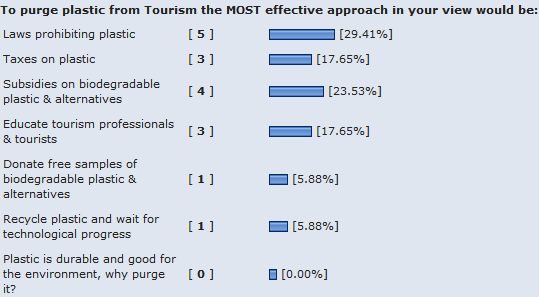
The
majority (41.18%) favour taxes or subsidies, 29.41% think laws banning plastic
are the most effective option, 17.65% believe that education of tourism
professionals and tourists is the lasting way, with only 11.76% favouring low-key
measures, “waiting” for technological progress or “donating free samples” of alternatives
to plastic. Plastic
can be found nearly everywhere in the tourism ecosystem: besides plastic water
bottles, think of cups, straws, food packaging, plastic chairs, shopping bags, garbage
bags, room fittings, tablecloths & menus, plasticized brochures, maps,
business cards, name badges (conferences), stickers, folders, detergent
packaging, hotel complimentary toiletry and vanity items, appliances (phones,
tv, coffee makers, fans, aircon, etc) plastic tickets (e.g. subway, Multi-entry
city-museum cards), but also what the tourist brings with them - travel bags
and their contents, gear and clothing, especially anything claiming to be water
proof and adequately insulated with the latest space technology for
intergalactic travel… Plastic
is a menace. Yet, it can also have a funny side: A
plastic duck – bath toy armada may finally arrive in A ‘Tourism
Without Plastic’ has of course broader connotations. It is a big step for
tourists and a small step towards a (utopian?) Tourism free of plastic food,
plastic smiles, plastic people. A tourism free from mass-produced, artificial,
pre-packaged experiences, an affordable, non-consumerist tourism where ‘plastic’
in your wallet is not so important. Where travel would be a fundamental human
right for all, in a free, borderless and equitable society, rather than two
weeks of excess for ‘northerners’ in the ‘south’, to make up for the misery &
the pointless pressure of the other fifty. Well, I did say utopian… Back
to Earth however, Ecotourism is already making a difference, playing a role in
peace-building in Finally,
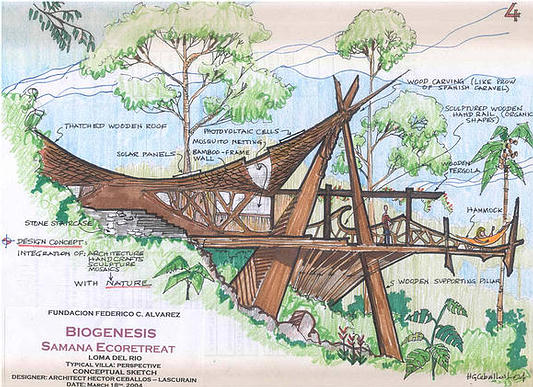
in 2008 we are celebrating 25 Years of Ecotourism! Hector Ceballos-Lascurain is
recognised as the Father of Ecotourism, not so much for coining a term (that
others may have also coined at different places and times) but the very person
who saw that Ecotourism would be recognised and endorsed by the prestigious
IUCN, and who single-handedly undertook to implement and document it as an
architect and scholar in its early steps. This celebration is most timely, at a
time that various other "tourisms" engage in acts of me-too-ism
trying to dethrone Ecotourism from the minds of ecotravellers. More on page 18.
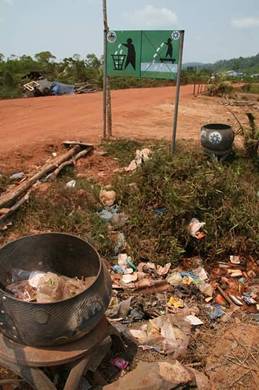
ECO
PHOTO
Submitted by Prof. Trevor Sofield
"The signage is
excellent, the message clear and, even the rubbish bin
Associate Professor in Tourism, Dept .of Geography, "Decision makers are not very aware about ecotourism issues, most think only about attracting more economic development and big projects regardless of the social and environmental impacts."
Yes,
Without any doubt, there is a difference between the
needs, the beliefs and the attitudes between Arabs and Western Europeans, at
the moment I do not think that
Yes there is a big demand in
My main experience is based on
I can suggest so many sites, such as
Shams
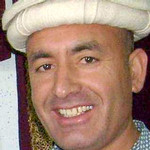
Uddin “The people of
Chitral believe in cultural diversity, peace and friendliness”
Mr
Uddin was born in
Chitral
Association for Mountain Area Tourism (CAMAT) is an NGO working for the
promotion of community-based tourism in Chitral, the northernmost district of
Pakistan, formed in 1998 by a wide spectrum of tourism stakeholders, including civil
society organizations, environment and cultural societies, traditional sports
clubs and academic institution within the district. The major objective of the
association is to enhance income-earning opportunities for “poverty reduction
through environmental-friendly and culture-rooted community-based eco-tourism
in the remote mountainous region of The
remote Chitral region, in the High Hindu Kush, traditionally controlled trade
routes from
The
Interview follows:
CAMAT [Chitral
Association for Mountain Area Tourism] was established in 1998 in response to
the growing prospect of tourism as a new sector of poverty reduction within the
parameter of the local culture and natural environment in Chitral and Northern
Areas in reference to the renowned Khow and Kalash cultures in terms of
festivals, local music, nature trails, mountaineering and wildlife watching as
a potential tourism product in Chitral district. Since 2002, CAMAT has received
UNESCO funding and technical support to promote ecotourism by protecting
traditional culture on the one hand and the natural environment on the other.
The Kalash
community is the real tourism attraction in the
The real
problem with the traditional cultures is that they are endangered,
notwithstanding their uniqueness and striking difference from what we call
‘modern cultures’. They provide a great magnet for tourists, who come to see
and study these cultures, without contributing to the economic benefit of the
locals. For instance the endangered Kalash community in three of the Kalash
valleys are certainly reduced to a ‘human zoo’ position, without getting any
economic benefit from their culture. This causes frustration among the Kalash
people and renders them susceptible towards the uniqueness and importance of
their own culture. Instead they are prone to think about a quick transformation
of their culture. For CAMAT, in such a situation, it becomes inevitable to
undertake measures to protect the traditional cultures and environment through
the involvement of stakeholders and adding economic incentives to the cultural
events and music and to encourage ecotourism such as wildlife watching so that
livelihood earning opportunities for the locals, particularly for guesthouse
owners, can be created. To this end, training programmes for music troupes from
both Khow and Kalash communities are being organized and an enabling
environment to the musicians and traditional sportsmen is provided through
festivals, which not only gives economic benefits to these people, but also
help highlight the traditional culture of Chitral. CAMAT has also been
imparting capacity building training to hoteliers, tour guides, porters and
drivers.
CAMAT has been working via a UNESCO project to promote community-based ecotourism to improve the livelihood of the locals by protecting the traditional culture and natural environment. However, we are encouraging numerous types of tourism, such as adventure, wildlife, cultural and study tourism etc. Through different varieties of tourism, CAMAT can be in a position to enhance the prospect of economic benefits for the locals through tourism, which is one of the new sectors of economic development. However, CAMAT’s potential area is ecotourism.
Chitral is
really a mosaic culture and the people of Chitral believe in cultural
diversity, peace and friendliness. Chitral has many things to display in terms
of rich cultures, unspoiled natural environment, and archaeological sites,
natural trails, wildlife, and snow-capped peaks for mountaineers. It has 13
different cultures and languages within the fold of its different valleys.
CAMAT believe that tourism can really contribute to intercultural understanding
and enable tourists to understand things in the given destination. CAMAT has
made efforts to provide information to tourists through brochures, personal
contacts and pictures. It is felt that tourists who visit Chitral always leave
with a positive impression about the peacefulness, hospitality, scenic beauties
and natural environment of Chitral. This further feeds into augmenting the
prospect of a tourism influx in the years ahead.
For the year
2006 onward sustainability of the activity has been one of our major areas of
consideration.
Personally I don’t
like the over-expenditure issues associated with the majority of NGOs. The big
problem with NGOs has always been high expenditures with almost no outcomes.
Donors often pay scant attention to the small details and only follow the
broader frame of operation, which is presented to them as a ‘make believe
document’. Taking into consideration the above facts and after practical
observation, CAMAT has based its activities with minimal funding from
UNESCO—the only source of funding for the association. We present details of
all expenditure to the Board of Directors—the honorary set up—which supervise
and provide guidance for management activities. We measure the success and
influence of our association through Tourist feedback forms, BoD Satisfaction
Remarks, voluntary services of Cultural Committees, voluntary services of
Chitral Polo Association, registered with CAMAT, productive interaction with
district administration and interaction with local communities, cultural
troupes and environment protection societies in the entire district.
CAMAT would
have redoubled its efforts to protect the culture of the endangered Khow and
Kalash communities, which we feel is the vital tourism product and a world
class cultural heritage. Unfortunately, the Kalash culture is dying out under
the pressure in the fast changing prospect of globalization.
CAMAT is a
non-profit non-loss association working for the promotion of ecotourism in
Chitral and is implementing a UNESCO project on ecotourism. Some of its
activities are revival and promotion of cultural festivals, protection of
natural environment, capacity-building initiatives, and media campaigning
through cultural movies, linkage development and advocacy campaigns. We would
welcome like-minded international entities involved in tourism to work with
CAMAT on the above agendas. Chitral is really safe for tourists and the best
time to visit is from April to October. During this time tourists can take in
cultural festivals, wildlife watching, trekking, horse riding and visit
archaeological sites and shop in Chitral’s main market.
CAMAT would
like to strengthen its activities, which it has undertaken for the last 5
years, as we feel that the improvement in eco-tourism really lies within these
initiatives, and strengthening them further will definitely contribute to
enhancing the prospect of tourism in the Northern Areas, let alone Chitral and
ECO PAPER Ecotourism in Post-Conflict Peace-Building: A New Tool for Reconciliation? By Nikolas J
Strong-Cvetich[1]
and Dr. Jason Scorse, PhD[2] Abstract This paper lays out three
hypotheses as to how ecotourism, through its unique economic incentives, can
help to build cooperation among formerly conflicting groups. The case study of
the Mountain Gorillas and ecotourism collaboration in the Virunga-Bwindi region
of Uganda, Rwanda, and the Democratic Republic of Congo provide a detailed
account of how collaboration in ecotourism between former warring parties is
contributing to the success of gorilla conservation, development, and the
foundations for sustainable peace. Other examples of how ecotourism could help
with post-conflict reconciliation in I. Introduction
Ecotourism is gaining increased credibility
among both the international economic development and the international
conservation sectors. The Ecotourism Society in 1991 defined ecotourism as:
“responsible travel to natural areas which conserves the environment and
improves the welfare of the local people”.[3] This definition has been
accepted by such organizations as Conservation International (CI) and the
United Nations Environment Program (UNEP). Ecotourism bridges the gap between
economic development and environmental preservation by creating economic
incentives for environmental conservation through tourism. Ecotourism has
become a very effective policy tool for reducing poverty and stemming natural
resource degradation and biodiversity loss.[4] This is also one of the fastest growing markets in
the world as the Virunga Massif Sustainable Tourism Development Plan reports,
“Many important ecotourism destinations were experiencing double digit average
annual growth between 1986 and 1998 (e.g., Ecuador 17%, Costa Rica 32%, Belize
25%, Botswana 19%, and South Africa 108%).”[5] In addition to
providing a means of protecting important ecological areas and generating
revenue for local peoples, ecotourism may also serve another important function:
to reduce the impetus for conflict and build stable cooperative relationships
among rival groups. This paper
proposes that ecotourism should be added to the burgeoning field of
environmental peacemaking. Many scholars once viewed the environment primarily
as a source of conflict, positing that resource scarcity and environmental
degradation often lead to violent competition[6]. Environmental peacemaking
theorists propose an alternative theory, that the mutual challenge and
trans-boundary nature of environmental problems creates scenarios in which
cooperation is more beneficial than conflict. As Ken Conca writes in his
seminal paper, The Case for Environmental
Peacemaking, “Overlapping ecosystemic interdependencies might provide a
chance to create opportunities for shared gains and establish a tradition of
cooperation.”[7]
Specifically,
ecotourism can build cooperative relationships in three distinct ways:
1)
Ecotourism creates unique, mutually
beneficial economic incentives for cooperation and nature conservation.
2)
Shared natural heritage can be a strong
motivator for cooperation and trust building, as can shared management and work
experience.
3) Ecotourism may be particularly amenable to
grassroots efforts that circumvent top-down, bureaucratic impasses, and lead to
positive spillover effects in other areas. The remainder of
the paper is organized as follows: Section II discusses how the current
environmental peacemaking and “Peace Park” literature fails to adequately
address the economic factors that hamper post-conflict reconciliation and trust
building, Section III outlines the theory of how ecotourism can assist in
post-conflict reconciliation, Section IV provides a case study by examining the
role of ecotourism in the gorilla conservation efforts of the Virunga-Bwindi
region between Rwanda, Uganda, and the Democratic Republic of Congo, Section V
explains how this analysis can be applied to other post-conflict situations
such as the Kashmir and the Ethiopian-Eritrean recovery, and Section VI
presents the conclusions. II. Literature Review Environmental
security is a relatively new area within the field of international relations.
The field has been dominated by the liberal vs. realist theories of the causes
of conflict and the factors that prolong them. Only recently have scholars
started to extend the field of conflict studies into new areas. Early work,
like that of Johan Galtung[8], began examining the link
between resource issues and conflict. Others such as Thomas Homer-Dixon[9] and Nils Petter Gleditsch
looked at the role of population growth and scarcity as impetuses of conflict.
Ken Conca disputed their central claim, contending that “environmental problems
also create incentives for cooperation and collective action[10]”. His work provided the
impetus for the larger discourse surrounding environmental peacemaking. Similar
to ecotourism, environmental peacemaking is also loosely defined. Geoffrey
Dabelko posits that there are four phases in which environmental peacemaking
can be transformative[11]: 1) The environment as conflict
prevention 2) The environment as a lifeline
in times of conflict 3) The environment as an
essential ingredient to peace agreement 4) The environment as
post-conflict trust builder This last area,
the environment as a post-conflict trust builder, has spawned a significant
sub-body of initiatives and literature surrounding the creation of Peace Parks,
which are trans-border protected areas that intend to build cooperation through
mutual management of protected areas[12].
Much of the literature on these parks concentrates on the management of
conflict and conservation, with the economics of the park and ecotourism only
addressed peripherally. The role of economic resources and beneficiaries are not mentioned as
goals of Peace Parks; they are largely left as unexamined variables in the
environmental peacemaking literature. A more thorough
examination of the role of ecotourism in building collaboration within the area
of environmental peace-building is needed. Similarly, despite the ongoing
research, ecotourism has not been fully explored as a tool for peacemaking and
cooperation. Ecotourism, which
was coined in the late-seventies, is considered as distinct from nature-based
tourism. At the onset of ecotourism research, many scholars argued over the
definition and criteria. Even after the International Ecotourism Society coined
the definition, there was still disagreement over what the definition actually
meant. Donald G. Reid of 1) involve travel to natural
destinations 2) minimize impact 3) build environmental awareness 4) provide direct financial
benefits for conservation 5) provide financial benefits
and empowerment for local people, 6) respect local culture 7) support human rights Nowhere in her
criteria is cooperation or promoting peace mentioned. Only a small number of
scholars have addressed the peacemaking potential of tourism, largely because
these investigations have only examined the exchange between host and visitor.[15] No one has looked at the
peacemaking potential of ecotourism between rival groups in post-conflict
regions. III. How Ecotourism Can Assist In Post-Conflict
Reconciliation As Geoff Dabelko
suggests, “sustainable development is critical to ensuring global security, and
peace is required for effective development.”[16] Ecotourism can be an
essential tool for helping to integrate development and economic incentives
into environmental peacemaking efforts. Ecotourism has this potential for
several reasons. First,
conservation can create incentives for cooperation and trust-building through
the interdependence created by the nature of ecosystems. The effect of
collaborative conservation also creates economic interdependence due to the
revenue from ecotourism. Once livelihoods can be tied to cooperation, the
incentive to fight can be reduced significantly. Nowhere do we see this
illustrated more clearly than during the 1924-1994 conflict in Ecotourism also
can create many other forms of economic interdependence, as revenue from
conservation moves to different sectors of the economy and different regions.
Ecotourism attracts visitors to a central location, but once they arrive,
visitors tend to visit other sites and services, which may cross former
adversarial boundaries.[18] For example, there is an
ecotourist operation in This form of
cooperation is especially valuable in post-conflict situations, where many
people’s livelihoods have been shattered by the conflict, and they often must
rely on the unsustainable use of natural resources. This can perpetuate
conflict, as resources become increasingly scarce and the catalyst for conflict
remains. Ecotourism, especially if managed at the local level with the majority
of the revenue going to benefit local people and local conservation needs, can
help to diffuse the cycle of conflict and unsustainable resource use. A second way in
which ecotourism builds trust amongst people is through mutual management of
natural resources. As Alexander Carius states: “The joint management of shared
resources can be not only a way to keep both parties talking, but the key to
negotiating a resolution[21]”. This logic is not new, but in past studies it has only referred
to the management of natural resources and scientific data-gathering
activities. Little has been said regarding the effects of economic development
through ecotourism on peacemaking. This is where much of the A third way in which ecotourism can create long-term
cooperation in post-conflict situations is its emphasis on grassroots
cooperation. Ecotourism is generally considered “low politics”, which means it
is a lower political priority and not considered an issue of national security
on a states agenda for cross border relations.[22] As Dabelko contends,
“When environmental issues are a low political priority, they can offer an
oasis of cooperation within a larger conflict. In this case, environmental
issues do not threaten the most contentious issues in the relationship and
thereby may provide a safe first step for dialogue[23]”. In effect, environmental collaboration may be a means
to circumvent barriers to post-conflict reconciliation erected by stubborn
leaders at the top. Again, examining the Irish example, because tourism was not
a “hot button” issue between the leadership of the two sides they were able to
collaborate for many years in the realm of tourism with less scrutiny from the
government than in other areas. Ideally,
ecotourism seeks to enhance the conservation of the local area through limiting
the numbers of tourists who visit. On one hand, this can limit the potential
revenue for the local people in the short-term, but it is essential for both
long-term economic and environmental sustainability. In his ground
breaking work, RW Butler outlines the Tourist Area Life cycle model, in which
he argues that: “Visitors will come to an area in small numbers
initially, restricted by lack of awareness, facilities and local knowledge. As
facilities are provided and awareness grows, visitor numbers will increase.
With marketing, information dissemination and further facility provision, the
area’s popularity will grow rapidly. Eventually, however, the rate of increase
in visitor number will decline as levels of carrying capacity are reached.
These may be identified in terms of environmental factors…”[24] IV. The Virunga-Bwindi Case Study Spanning Rwanda,
Uganda, and the Democratic Republic of Congo (DRC), The Virunga-Bwindi region
has experienced many years of devastating war (some stats on duration and
casualties), One of the most diverse
regions of the world, it encompasses four national parks: Virunga National
Park, Volcanoes National Park, the Mgahinga Gorilla National Park and Bwindi
Impenetrable Forest National. This afro-montane ecosystem (a type of mountain
forest native only to the region) is host to a variety of endemic species, the
most widely recognized and highly threatened of which is the mountain gorilla.
The region contains all of the remaining 706 mountain gorillas in the world. The region is
marred by poverty, having experienced intense violence and conflict for the
past decade and a half. Made up of several different ethnic groups the violence
commenced in 1994 during the Rwandan genocide. As Hutus fled the country and
ended up in refugee camps, many exploited the natural resources in the parks in
order to survive[25].
The incursion of Hutu refugees and ex-militia members into the eastern part of
the Democratic Republic of Congo heightened tensions in the region. This
eventually led to another great war in 1997 in the Great Lakes region, involving
The Virunga-Bwindi Region[26] “The Tourism
Development Plan for Virunga Massif provides a framework for the development of
sustainable tourism in the three countries and for the key stakeholders to
contribute to the development process. It is anticipated that the Plan will:
(a) provide a long term vision for enhancing tourism; (b) provide structured
and guided development process for tourism facilities; (c) ensure inclusion of
the local community in the planning, development, implementation and benefit
sharing process; (d) ensure increased revenues from tourism; (e) ultimately
ensure improved conservation and management of the natural resources and (f)
enhance collaboration among gorilla parks in Uganda, DR Congo and Rwanda.”.[27] Though not formally addressed in this
document, this collaborative attempt at ecotourism management is significant
not only to the success of gorilla conservation, but also for meaningful
peace-building and the larger stability of the region. The collaborative
gorilla tourism management effort serves to meet these goals of enhancing
cooperation and trust in five important ways. First,
collaborative ecotourism management creates economic interdependencies between
former adversaries by reducing capital investment costs (fixed costs) and
creating a revenue-sharing agreement at the local level. As the International
Gorilla Conservation Program (IGCP) states: “regional tourism is understood in
this sense as collaborating with the neighboring countries to reduce costs and
the investments required to develop the resource, and facilitating regional
travel for tourists who wish to spend time exploring the region as a whole[28]”. The revenue sharing scheme is dependent on
the preservation of the gorillas, for without them the tourism revenue will
disappear. In Uganda, from 1994 to 1999, gorilla tourism netted foreign
exchange earnings of approximately US$7.7 million, generated US$15.4 million of
sales for the economy, contributed US$4.77 million in government tax revenues,
supported close to 1,700 person years of jobs, and contributed US$6.93 million
to the national income[29]. The following chart
demonstrates the rates at which local people benefit from tourism in the
Virungas area: Obviously some
areas benefit more than others, but this revenue stream enhances peace-building
efforts by creating mutual economic dependencies across borders. Second, because
the gorillas are a source of economic development in the region, warring
parties are forced to cooperate and collaborate to ensure the survival of this
threaten species. This was illustrated by the presence of the rebel groups at
the bargaining table for
Gorilla
Protection Accords.[31] The governmental and
international organizations recognized the importance of including rebels, as
they had the potential to disrupt tourism and gorilla conservation, and the
rebel groups agreed to participate in conservation activities because they recognized
the enormous economic value and precarious existence of the gorillas.
Third,
the economic interdependence created by gorilla tourism reduces the impetus for
conflict between the former rivals, and the international recognition of
tourism brings a higher degree of visibility to the reconciliation efforts more
generally. As Charles Besançon, UNEP consultant to the IGCP, notes (based on a
conversation with a park guard during a fact-finding mission to the areas):
“I want to tell you a fact that you will not
hear anyone talk about. We all know this but never talk about it. Not two
kilometers away from here are hundreds of Rwandan Soldiers [in the PNVi-Sud –
Mikeno Secteur of DRC]. They are there to secure this region from
DRC
invasions. The reason no one discusses them is that they are happy these guys
are there. In other places where soldiers are posted, there are attacks at
night and locals are harassed and sometimes tourists, but in this region,
because of the gorillas, and the international interest in the gorillas there
are no attacks and the military forces actually create security instead of the
other way around.”[32]
This
illustrates the peace-building effect of the dynamic between gorillas, tourists
and armed groups. More importantly, this highlights another effect ecotourism
has in reducing tensions and maintaining security; it helps to draw outside
attention to issues surrounding the conflict and creates an additional
disincentive for conflict through enhanced international scrutiny. Fourth, the experience
of co-managing a natural resource serves to create and sustain peace in the
region. The Gorilla Project has set out to standardize rules, service
practices, and interpretation guidelines in gorilla tourism across all of the
parks in the three countries. These joint training sessions have helped to
cultivate common objectives and shared experience, which are required for
building trust across previously warring factions. A recent WWF report
acknowledges as much: “Having the same rules in each tourism site will
strengthen collaboration and reduce competition among the three countries,
which jointly have developed the harmonized tourism rules and regulations[33]”. This shared goal
creates new pathways toward reconciliation that are found only through collaborative
work. Finally, in order
to successfully meet the needs of the guests and ensure the survival of the
gorillas, rival groups must work in close contact with each other. As has
already been witnessed within V. Other Examples Of Potential Ecotourism-Peacemaking
Connections Ever since the
split of Indian and Throughout the
region there are natural and cultural commonalities, which could be used to
begin building cooperation. In both countries there is a strong history of
mountaineering; the region contains “….a joint
Indian and Pakistani mountaineering expedition, organized by Roger Payne of
UIAA (International Mountaineering and Climbing Federation) and IUCN, organized
a Symbolic Peace Climb (August 24-29, 2002) involving Indians and Pakistanis,
with a series of climbs in the Aletsch Glacier area, and highlighted the
Siachen issue.” Ecotourism, with a focus on mountaineering
and trekking, managed at the local level, could help to build trust and
cooperation between Indians and Pakistanis in the In the case of Siachen and After a two-year
war from 1998-2000 in which 100,000 Ethiopian and Eritreans were killed
fighting over a 400 square kilometre piece of land, the two governments still
maintain cold relations. This war was fought by two leaders who were from the
same ethnic group, spoke the same language, practiced the same religion, and
fought as allies in a previous war. The war devastated the economies of both
countries and severely degraded the environment. Ethiopia and
Eritrea form one of Africa's birding hotspots, possessing 861 species,
including 30 species endemic[39]Currently, there are numerous
bird-watching enthusiasts who are waiting eagerly for the development of
ecotourist facilities and the cessation of tensions between the two countries[40]. Considering the
uniqueness of the resource and the preexisting demand, implementing
community-based ecotourism along this border region and between the two sides
would be able to serve several needs at once. It would provide much-needed
economic development and it would necessitate cooperation between the groups in
both countries, as the birdlife is not constrained by political borders. VI. Conclusions This paper has
described why ecotourism should be taken seriously as another potential tool to
promote environmental peacemaking. We have provided both a framework for how to
think about ecotourism in post-conflict situations, as well as examples of
ongoing successes and areas where the potential exists for ecotourism to help
with peacemaking efforts. However,
ecotourism does face significant obstacles that may limit its effectiveness. Ecotourism is only
applicable in the first and final stages of the conflict continuum (avoiding
conflict and post-conflict trust building). It cannot be applied to situations
where the conflict is ongoing since tourists cannot be expected to visit war
zones. A second challenge regards revenue sharing among local communities and the degree of local involvement in the management processes. Because of the rather loose and unquantifiable definition of ecotourism, the degree to which locals are involved in the decision-making and receive revenue is specific to the individual project. Often foreign investors or the domestic elite provide the necessary capital, leaving the locals, who are most often more heavily impacted by the presence of conflict, out of the loop. This can also fuel pre-existing conflicts, as we have seen in many cases of people versus parks, which can often occur when conservation limits the ability of people to eke out a livelihood from the natural resource base[41]. Finally, if
ecotourism is managed at the local level, there is the possibility that
competition for tourists may create larger conflicts over scarce tourist
revenue, which is why some higher-level planning may be necessary. Ecotourism
limits the number of visitors, which has the potential to create competition
between local groups, some of which may have a history of conflict. It is
important to note, however, that if all groups have some stake in the revenue
stream from ecotourism they will have a strong incentive not to restart the
conflict and scare away the tourists. Bibliography Ali, Saleem. “
http://www.envirosecurity.org/conference/working/K2PeacePark.pdf.
Accessed: 3/5/07. Besonçon, Charles.
“PCIA Virunga-Bwindi Region, Field Visit 2 - Trip Report” International
Gorilla Conservation Project. http://www.iisd.org/pdf/2006/security_igcp_field2_2005.pdf
Carius, Alexander.
“Environmental Peacebuilding: Conditions for Success”. Environmental Change and Security Program
Report.2006. Issue 12. Conca, Ken “The
Case for Environmental Peace-Making”. Conca, Ken.
“Environmental Cooperation and International Peace”. In Gleditsch and Diehl,
eds. 2001: p. 225 http://www.ecotourism.org.
Accessed: 2/19/07 http://www.ecotour.org, Accessed: 2/16/07 Galtung, Johan. Environment,
Development and Military Activity: Towards Alternative Military Doctrines.
1982. Giuliano Tallone,
“Siachen Peace Park: A Case Study for the Valorisation of High Mountain
Ecosystems” Transboundary Protected Areas in the Governance Stream of the 5th
World Parks Congress, Durban, South Africa, 12-13 September 2003. Homer-Dixon,
Thomas. “Environmental Scarcities and Violent Conflict”. International
Security. 1994. 19(1): p. 5-40. Honey, Martha. Ecotourism
and Sustainable Development: Who owns Lagiewski,
Richard. “Tourism in the Cross-Border Region of the Lanjouw A., A.
Kayitare, H. Rainer, E. Rutagarama, M. Sivha, S. Asuma, and J. Kalpers. 2001 Beyond
Boundaries: Transboundary Natural Resource Management for Mountain Gorillas in
the Virunga-Bwindi Region. Mehta, Hitesh and
Christine Catee. “Virunga Massif Sustainable Tourism Plan”. International Gorilla Conservation Program: 2005 Moyini Yakobo and
Uwimbabazi, “Analysis of the Economic Significance of Gorilla Tourism in Owen, James.
“Congo Rebels Agree to End Gorilla Slaughter”.National Geographic News. Jan.25th, 2007.
http://news.nationalgeographic.com/news/2007/01/070125-gorillas-congo.html.
Accessed: 4/29/07 Reid, Donald G. Ecotourism
Development in Eastern and Southern Sandwith,
Trevor. “Is it worth the effort and
expense? Challenges for implementing Transboundary Conservation” presented at: ITTO/IUCN
International Workshop on Increasing the Effectiveness of Transboundary
Conservation Areas in Tropical Forests,
17-21 February 2003, Schwartzman,
Stephan , Daniel Nepstad, and Adriana Moreira “Arguing
UNEP. “About Ecotourism”.
http://www.uneptie.org/pc/tourism/ecotourism/home.htm, Accessed: 2/17/07 Vivero Pol, Jose
Luis. A Guide to Endemic Birds
of WWF. Management for Mountain Gorillas in the
Virunga-Bwindi Region. Wiedemann, Amy.
“Interview with Nikolas Strong-Cvetich and Jason Scorse”. African Wildlife Federation. 4/3/07. Zuelow, Eric G.E.
“Ingredients for Cooperation: Irish Tourism in North South Relations,
1924-1998”. New
ECOCLUB
HEADLINES - News from our Members around
the world Marking
25 years of the Ceballos-Lascurain definition of Ecotourism July 2008 marks
an important anniversary for the global Ecotourism movement: it will be 25
years from the coining and preliminary definition later adopted by IUCN of the
term “Ecotourism” by Architect Hector Ceballos-Lascurain, a Mexican
environmentalist and ecotourism expert. As part of this commemoration, Mr
Ceballos-Lascurain is participating in an online Q&A Forum organised by
Planeta.com (
http://forum.planeta.com/viewtopic.php?t=1147).
There, ECOCLUB Magazine asked Architect Ceballos if there was now a need for a
new, political version of Ecotourism, in synch with the world ecological
movement and green parties. Mr Ceballos agreed, adding that this was already
the case in many countries and that ‘Ecotourism should not be seen as a fad or
a green fashion, politically and socially ornamental but as a top priority
sustainable and conservation activity’.
Hector Ceballos
is currently involved in the planning and development of two large ecotourism
parks (2,100 hectares in total) in two new satellite cities in Baja California
and Jalisco where for the first time in Mexico, a housing developer has decided
to set apart in both cases 20% of the total land allowed for urban development
for conservation and nature recreation purposes. Architect Ceballos is carrying
out both master plans and the design of ecolodges, interpretative centres,
nature trails, organic farming plots and an alternative technology demonstration area. He is also currently preparing an environmental architectural
and master plan for an ecolodge in Mount Kinabalu World Heritage Site, Sabah
(Borneo), Malaysia, where he is applying ecotechniques such as solar energy for
heating water and providing electricity, natural cross ventilation and
ecological waste treatment, as well as a native species botanical garden. >> For more details: http://www.ceballos-lascurain.com Leeds
Met launches Responsible Hospitality Management Masters A unique and
innovative degree that explores the role of responsible and green practices in
the hospitality industry has been launched by The
University’s International Centre for Responsible Tourism (ICRT) (Web:www.icrtourism.org)
has launched the Responsible Hospitality Management MSc to meet the growing
demand for sustainable and ethical solutions in the international hospitality
industry. Xavier Font,
Director of Studies at the ICRT explains: "This is the only course in the
world that gives you the skills, knowledge and contacts to change practice
exclusively in responsible hospitality, whether you want to develop a community
based accommodation project or green a corporate hospitality chain." The
Masters course has been developed through the consultancy work of the Centre,
including international hotel chains and the Green Tourism Business Scheme in
the The International Centre for Responsible Tourism (ICRT) is a post-graduate training and research centre and has played a leading role in the responsible tourism and hospitality movement through research and development work within industry and the government.
About New
'See Turtles' program from Ocean Conservancy Ocean
Conservancy announces its new conservation tourism program, SEE Turtles. The
program informs travellers about sea turtle locations where local conservation
efforts are underway, resulting in support for sea turtle protection while
increasing community resources that help residents thrive and value sea turtles
in the wild. SEE Turtles also provides turtle watching guidelines to travellers
taking conservation tours to reduce negative impacts on turtles and the host
community. Going beyond the mantra of tourists not impacting the environment
they visit, Ocean Conservancy suggests that travellers should make an impact –
a positive one – through conservation tourism. With six out of seven sea turtle
species endangered, SEE Turtles is founded on the premise that the growing
business of sea turtle viewing and tourism must be developed with the goal of
protecting sea turtles as well as generating revenue. “Sea turtle
populations face serious threats from getting caught in fishing gear and from
market demand for turtle meat, eggs and shells. People who are on the ground
protecting sea turtles where turtles feed or nest can make the biggest positive
impact for the animals through community ties, cultural sensitivity, and simply
because of their proximity to turtles,” said Dr. Wallace J. Nichols, a senior
scientist with Ocean Conservancy and a leading international sea turtle expert.
The SEE Turtles program currently focuses efforts on essential sea turtle
habitat in
Basecamp
Explorer launches 'EcoStorm' initiative and workshop The Basecamp
Explorer Group, an international ecotour operator, is launching 'EcoStorm, a
movement for sustainable tourism destination development'. An inaugural
workshop entitled 'Tourism in Peace with People and Nature' will be held March
24th through 28th 2008 Based on more
than ten years of hands-on experience and best-practice principles, this
workshop will explore the challenges and opportunities associated with each of
these three pillars. It will examine each pillar through a set of five core
sessions, several field excursions, and exercises lead by experts in the field
of sustainable tourism, conservation, and development. The workshops
will take a hands-on approach and are based on a participatory process
involving resource people from Basecamp Explorer, as well as experts from a
wide network. Some of these include the tourism sector, environmental
organizations involved in tourism-for-conservation and development
organizations utilising tourism in poverty alleviation and community
development. Each workshop will also include local tourism practitioners and
destination stakeholders. The seminar presenters include: Martha Honey, Director of the Centre for Ecotourism and Sustainable Development (CESD), Washington DC, USA, Arild Molstad, Writer, photo journalist, Norway, Judy Kepher Gona, Executive, Ecotourism Kenya (ESOK), Stefan Norris, International Conservationist , Basecamp Foundation, Norway, Dr Lars Lindkvist, CEO of the Basecamp Foundation, Kenya. Registration ends March 7th 2008
[1] MPA Candidate 2007, Monterey Institute of International Studies, nikolas.strong-cvetich@miis.edu.
[2] Assistant Professor, Graduate School of International
Policy Studies, Monterey Institute of International Studies,
jason.scorse@miis.edu. [3] www.ecotour.org, Accessed: 2/16/07 [4] UNEP. “About Ecotourism”. http://www.uneptie.org/pc/tourism/ecotourism/home.htm, Accessed: 2/17/07
[5] Epler Wood M., Wight P. and Corvetto J. “International Markets, Business, Finance,
& Technical Assistance Models for Ecolodges in Developing Countries”. A
Report for IFC/GEF/SME [6] Homer-Dixon, Thomas. “Environmental Scarcities and Violent Conflict”. International Security. 1994. 19(1): pp: 5-40.
[7] Conca,
Ken “The Case for Environmental Peace-Making”.
[8]
Galtung, Johan. Environment, Development
and Military Activity: Towards Alternative Military Doctrines. 1982. [9] Homer-Dixon, Thomas. “Environmental Scarcities and Violent Conflict”. International Security. 1994. 19(1): p. 5-40. [10] Conca, Ken. “Environmental Cooperation and International Peace”. In Gleditsch and Diehl, eds. 2001: p. 225
[11] Dabelko, Geoffrey. “Environmental Pathways to Peace-Making“. Presentation.
www.wilsoncenter.org/events/docs/Dabelko%20Wilson%20Center%20EP%20without%20pics%20for%20web.ppt.
Accessed: 2/21/07.
[12] Sandwith, Trevor. “Is it
worth the effort and expense? Challenges for implementing transboundary
conservation” presented at: ITTO/IUCN
International Workshop on Increasing the Effectiveness of Transboundary
Conservation Areas in Tropical Forests, 17-21 February 2003,
[13] Reid, Donald G. Ecotourism
Development in Eastern and Southern
[14]
Honey, Martha. Ecotourism and Sustainable Development: Who owns [15] The 3rd Global Summit on Peace through Tourism http://www.iipt.org/3rdglobalsummit/presentations/EducationForum2005.pdf
[16] Dabelko, Geoffrey.
“From Threat to Opportunity: Exploiting
Environmental Pathways to Peace”, Prepared for: “Environment, Peace and
the Dialogue Among Civilizations and Cultures” May 9-10, 2006,
[17]
Zuelow, Eric G.E. “Ingredients for Cooperation: Irish Tourism in North South
Relations, 1924-1998”. New
[18] Yakobo, Moyini and
Berina Uwimbabazi, “Analysis of the Economic Significance of Gorilla Tourism in
[19] “Trebizat river canoe safari”,
http://www.huck-finn.hr/canoeing_trebizat.htm. Accessed 2/15/07.
[20]Lagiewski, Richard. “Tourism in the
Cross-Border Region of the
[21] Carius, Alexander. “Environmental Peacebuilding: Conditions for Success”. Environmental Change and Security
Program Report.
[22] “It
is often implied that "high politics," concerned with diplomatic and
military affairs, is more important than "low politics," dealing with such mundane and unimportant
matters such as trade and investment.” From: Baldwin, David A. Economic
Statecraft.
[23] Dabelko, Geoffrey.
“From Threat to Opportunity: Exploiting
Environmental Pathways to Peace”, Prepared for: “Environment, Peace and
the Dialogue Among Civilizations and Cultures” May 9-10, 2006,
[24]
[25]Lanjouw A., A. Kayitare, H. Rainer, E. Rutagarama,
M. Sivha, S. Asuma, and J. Kalpers.. “Beyond Boundaries: Transboundary Natural
Resource for Mountain Gorillas in the Virunga-Bwindi Region”. [26] Mehta, Hitesh and Christine Catee. “Virunga Massif Sustainable Tourism Plan”. International Gorilla Conservation Program:. 2005.
[27]WWF.
Management for Mountain Gorillas in
the Virunga-Bwindi Region.
[29] Yakobo, Moyini and
Berina Uwimbabazi, “Analysis of the Economic Significance of Gorilla Tourism in
[30] Mehta, Hitesh and Christine Catee. “Virunga Massif Sustainable Tourism Plan”. International Gorilla Conservation Program:. 2005. p. 15 [31] Owen, James. “Congo Rebels Agree to End Gorilla Slaughter”.National Geographic News. Jan.25th, 2007. http://news.nationalgeographic.com/news/2007/01/070125-gorillas-congo.html. Accessed: 4/29/07 and Wiedemann, Amy. “Interview with Nikolas Strong-Cvetich and Jason Scorse”. African Wildlife Federation. 4/3/07.
[32] Besançon, Charles. “PCIA Virunga-Bwindi Region, Field
Visit 2 - Trip Report” International Gorilla Conservation Project.
http://www.iisd.org/pdf/2006/security_igcp_field2_2005.pdf
[33] Lanjouw A., A. Kayitare, H. Rainer, E.
Rutagarama, M. Sivha, S. Asuma, and J. Kalpers. 2001. Beyond Boundaries: Transboundary Natural
Resource Management for Mountain Gorillas in the Virunga-Bwindi Region.
[34] Wiedemann, Amy. “Interview with Nikolas
Strong-Cvetich and Jason Scorse”. African
Wildlife Federation. 4/3/07. [35] Ibid.
[36] Giuliano Tallone,
“Siachen Peace Park: A Case Study for
the Valorisation of High Mountain Ecosystems” Transboundary Protected Areas in the
Governance Stream of the 5th World Parks Congress, Durban, South Africa, 12-13 September
2003.
[37] Ibid
[38] Ali, Saleem. “ http://www.envirosecurity.org/conference/working/K2PeacePark.pdf. Accessed: 3/5/07.
[39]
Vivero Pol, Jose Luis. A Guide to Endemic Birds of
[40]
“Birdwatching tourism ready for take off in
[41]
Schwartzman, Stephan , Daniel Nepstad, and Adriana Moreira “Arguing
|
||||||||||||





 ECOCLUB.com: Much is being said about
Tourism's potential for peace building. Have you seen this at all in
ECOCLUB.com: Much is being said about
Tourism's potential for peace building. Have you seen this at all in 
 ECOCLUB.com: How high on the agenda, is
environmental protection and water conservation in particular when it comes to
new tourism project developments in
ECOCLUB.com: How high on the agenda, is
environmental protection and water conservation in particular when it comes to
new tourism project developments in 


 ECOCLUB.com:
Are you trying to develop Community Tourism & Ecological Tourism in the
Chitral Area, or, as an association, are you happy to represent any type of
tourism in the light of the current difficult circumstances?
ECOCLUB.com:
Are you trying to develop Community Tourism & Ecological Tourism in the
Chitral Area, or, as an association, are you happy to represent any type of
tourism in the light of the current difficult circumstances?

 ECOCLUB.com:
Finally, what are your organisation's plans for the immediate future?
ECOCLUB.com:
Finally, what are your organisation's plans for the immediate future?