ECOCLUB Community™
news & views from our global professional network
Interesting article by Professor Xavier Font et.al on the uses and effects of green accommodation taxes. "From eco-social intent to green growth drift: The governance of a sustainable tourism tax" www.sciencedirect.com/science/article/pii/S0160738… . The authors rightly argue that accommodation taxes need clear legal purpose, ring-fenced revenues, transparency and alignment with limits on...Interesting article by Professor Xavier Font et.al on the uses and effects of green accommodation taxes. "From eco-social intent to green growth drift: The governance of a sustainable tourism tax" www.sciencedirect.com/science/article/pii/S0160738… . The authors rightly argue that accommodation taxes need clear legal purpose, ring-fenced revenues, transparency and alignment with limits on growth. Here in Greece hotels, short-term rentals and villas alike pay the "Climate Resilience Fee" (TAKK) monthly through the myAADE platform. No one really knows where these taxes go. No relevant Ministry issues an annual public report stating the total CRF revenue, the percentage and absolute distribution across project categories, the geographical distribution, or indicative 'climate resilience' projects. There is no discrete coding for revenue/expenditure, preventing the public from monitoring the corresponding CRF. There is no connection to open data (data.gov.gr / opengov) where one could download the relevant data and analyze it. Show more
About 20 years ago (30 July 2006) the great Green political philosopher, activist and ecological social theorist and pioneer, Murray Bookchin passed away leaving behind a tremendous endowment of fresh ideas and future frameworks, in dozens of books and hundreds of articles and speeches. Influenced by the works of Kropotkin, among others, Bookchin methodically and exhaustively explored every...About 20 years ago (30 July 2006) the great Green political philosopher, activist and ecological social theorist and pioneer, Murray Bookchin passed away leaving behind a tremendous endowment of fresh ideas and future frameworks, in dozens of books and hundreds of articles and speeches. Influenced by the works of Kropotkin, among others, Bookchin methodically and exhaustively explored every possible combination and permutation of ecology, anarchism and socialism, subsequently developing his own concepts, including Social Ecology, Libertarian Municipalism, and Communalism. His first book "Our Synthetic Environment" was published a few months before Rachel Carson's *Silent Spring*, and it was far more radical and wider in scope and prophetic in many ways. Bookchin rightly pinpointed rapid industrialization and development as the cause of environmental degradation and poisoning, which leads to a health and social crisis. He convincingly explained that the ecological crisis was fundamentally a social crisis. In his future works, he endlessly searched for solutions, proposing decentralization, human-scale, and non-hierarchical, democratic communities and workplaces among other concepts. The Institute of Social Ecology continues his work and a great online course is coming up in July. social-ecology.org/wp/courses/the-anthropology-of-… Show more
Will THIS be the future of hospitality? Presently, it is indeed just a marketing gimmick for fancy hotel reception desks, but soon robots could handle cleaning and preparing rooms - a difficult and poorly paid job and one of the hardest to fill post-pandemic. This could benefit workers by alleviating some physically strenuous work but some positions will be lost. Over the next decade some large...Will THIS be the future of hospitality? Presently, it is indeed just a marketing gimmick for fancy hotel reception desks, but soon robots could handle cleaning and preparing rooms - a difficult and poorly paid job and one of the hardest to fill post-pandemic. This could benefit workers by alleviating some physically strenuous work but some positions will be lost. Over the next decade some large chains are expected to use robots to automate repetitive, structured tasks such as corridor vacuuming, public-area mopping, overnight disinfection and basic shuttling of linens and amenities. Humanoid prototypes like China's Zerith H1 (cost c. EUR 12,000) are also being trialed specifically for cleaning floors and bathrooms, restocking amenities and collecting towels. Overall, it's unclear if the Leisure-Hospitality & Tourism sector, collectively the world's greatest provider of low-paid, entry-level jobs, has a real incentive to automate with humanoid services.
www.dw.com/en/robot-suitcases-and-concierges-the-f…
Show more
Robot suitcases, AI concierges — the future of hospitality?
Concierge robots and autonomous systems are increasingly entering hotels and airports. What still seems like a gimmick today could help solve staff shortages in the…
You cannot take Green politics out of Ecological Tourism. Otherwise, Necker Island, a billionaire's private resort would be called "ecological" because it has "three giant wind turbines". Perhaps Epstein's island did have some solar panels too? So, If you do not want to call such resorts green or ecological, you must explain why, and thus, Green politics. Who owns what, who bought what from...You cannot take Green politics out of Ecological Tourism. Otherwise, Necker Island, a billionaire's private resort would be called "ecological" because it has "three giant wind turbines". Perhaps Epstein's island did have some solar panels too? So, If you do not want to call such resorts green or ecological, you must explain why, and thus, Green politics. Who owns what, who bought what from whom, with what funds, of what origin, how were they made, were they taxed and so on. Show more
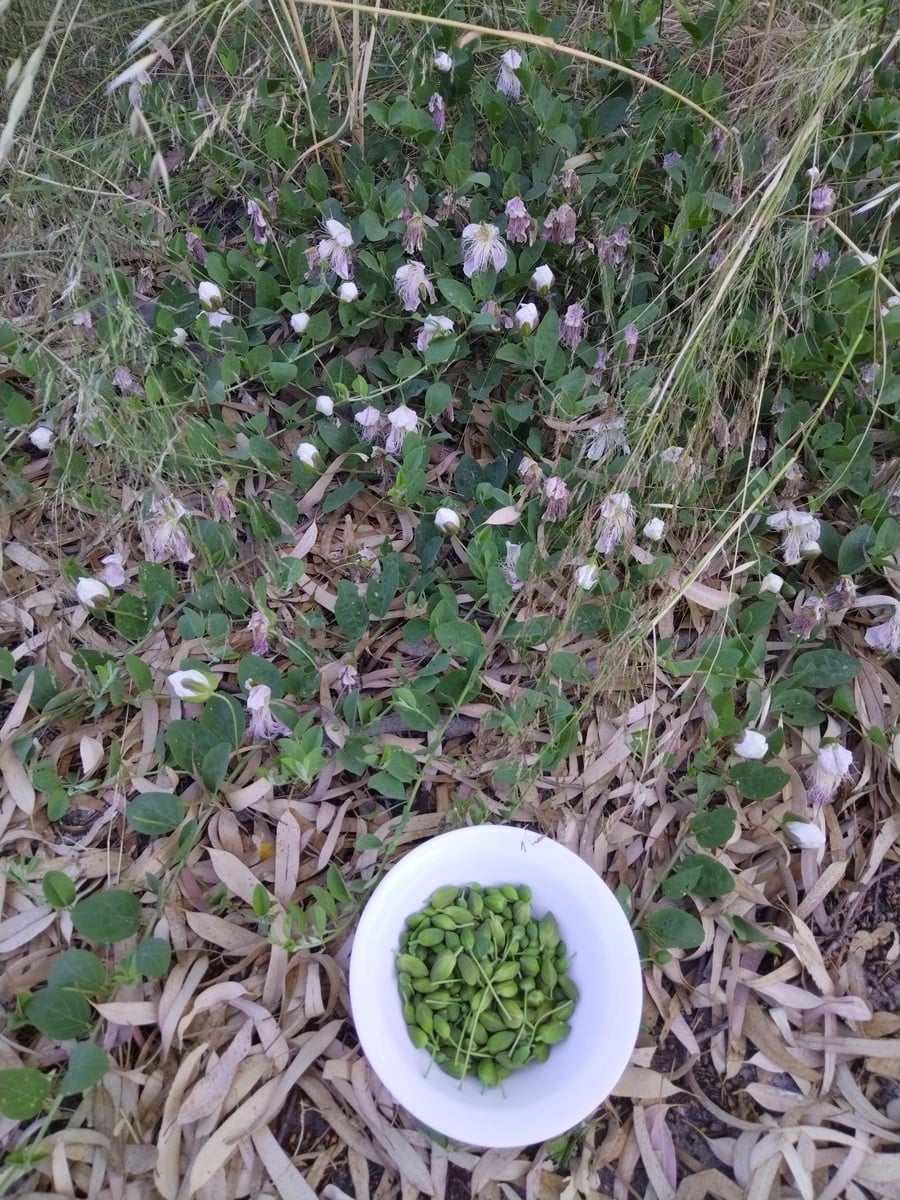
Caper: the flower you eat before it blooms! A key ingredient of Mediterannean dishes, the pickled flower buds of the caper bush (Capparis spinosa) are an antioxidant powerhouse, contain essential minerals such as copper and are a good source of vitamin K among other benefits. Before eating them from a jar, you only need to soak them for a few minutes in cold water to remove the excess salt. If...Caper: the flower you eat before it blooms! A key ingredient of Mediterannean dishes, the pickled flower buds of the caper bush (Capparis spinosa) are an antioxidant powerhouse, contain essential minerals such as copper and are a good source of vitamin K among other benefits. Before eating them from a jar, you only need to soak them for a few minutes in cold water to remove the excess salt. If you wonder why a small jar is so expensive, try picking them one by one, while avoiding the thorns! This post is dedicated to the late Nikki Rose, a culinary tourism and agri-ecotourism pioneer and Chef, who passed away a year ago while guiding students on one of her wonderful educational tours in Crete. Nikki used the caper flower as a profile photo... Show more