|
|
||||||||||||||||
|
Navigation Menu - Please activate Flash to display.
|
||||||||||||||||
|
|
||||||||||||||||
|
1. MINIMISING ENVIRONMENTAL IMPACT |
||||||||||||||||
|
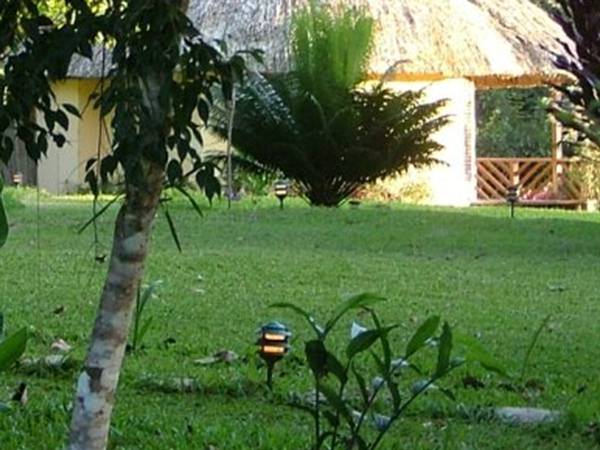
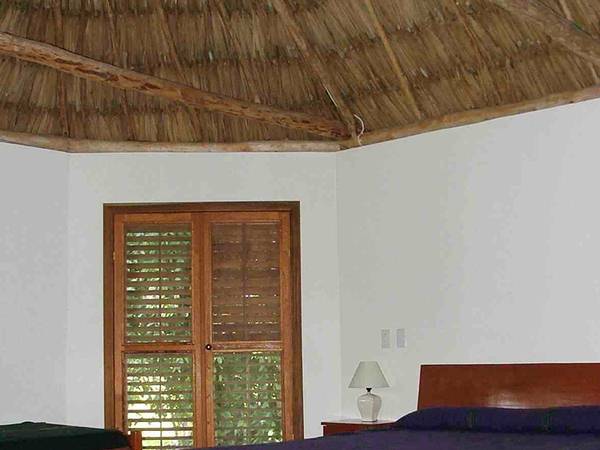
(b) Heating: We do not heat any space. Water in the guest cabanas is heated by energy efficient Paloma on-demand gas water heaters. (c) Cooling: Our cabana and lodge design removed the need for much cooling. Each guest cabana has one ceiling fan which draws from 18-80 watts at the various speeds. The main cooling was achieved by having high thatched ceilings and tall corner windows (2m x 1.3 m) which catch the available breeze. The thatched veranda is also part of the living area which requires no cooling.
(d) Cleaning: Cleaning is done using no electrical energy and using newly available bio-degradable cleaning products. Laundry is line dried whenever possible in order to reduce energy use. Our tumble drier is gas powered and less energy hungry than the electric alternative. (e) Water: We purify water drawn from the Rio Grande river. Water is one resource in which we are well-endowed with 3.5 metres of rainfall in 2006 and an annual average of more than 2.5 metres. Nevertheless we use electric power to pump from the river and purify but have balanced the system so that with large pressure tanks the pump runs for just 50% of the time that water is being passed through the system. We have information in our rooms for guests and in the kitchen and laundry for staff to help them minimize waste. (f) Cooking: We use bottled gas for cooking. We re-use plastic water bottles. We offer vegetarian and vegan cuisine on request and use as many local fruit and vegetables as possible and are including more local recipes prepared by our Mayan staff. (g) Waste disposal: We have three methods. Vegetable waste is composted and used in our gardens. Other organic waste is buried in a pit on the edge of our site away from guests and water sources. Metal, glass and plastics are transported to the local municipal dump 12 miles/19 kms away. The nearest recycling facilities are about 150 miles away so the small quantities of waste generated and energy used to transport waste there do not make the use of that recycling facility viable. We collected and used crushed cans instead of steel rebars in building a weather proof concrete walkway from the car park to the lodge. (h) Insect, pest control (how): The main pest we have to deal with is termites which after rains may attack the thatched roofs of the cabanas or the wooden verandahs. The most effective way to deal with them is by finding and physically removing the nests from trees and drowning the occupants. If they get into the thatch we have yet to find an alternative to malathion. Leaf cutter ant nests are removed by digging and finding the queen. (i) Noise Protection: We do not create any noise that could be a nuisance to our neighbours. (j) Accessible by public transport: We have buses passing along the main road 800 metres from the Lodge entrance.
(h) What is the recommended way of reaching your
Lodge from the nearest International airport:
(i) Distance from nearby village / city:
18 miles/29 kms. |
||||||||||||||||
|
2. FUNDING ENVIRONMENTAL CONSERVATION |
||||||||||||||||
|
(b) Contact, cooperation with local environmental
organisations:
(c) Direct Donations:
|
||||||||||||||||
| 3. REDUCING POVERTY | ||||||||||||||||
|
(b) Direct Donations:
(c) Other: |
||||||||||||||||
| 4. RESPECTING HUMAN RIGHTS / SOCIAL RESPONSIBILITY | ||||||||||||||||
|
(b) Do your employees have paid leave?
(c) Are your employees entitled to maternity
leave?
(d) Do you pay your employees above the minimum
wage?
(e) Average and maximum working day, and work
hours per week:
(f) Do you employ your staff all year round?
(g) Do you offer concessions to elderly visitors?
(h) Is there disabled access at your Lodge?
(i) What is your policy towards volunteers?
(j) What measures are in place to protect the
local indigenous population from some adverse impacts of tourism? |
||||||||||||||||
|
5. PROMOTING KNOWLEDGE & UNDERSTANDING |
||||||||||||||||
|
(b) Do guests interact with the local community
and how:
(c) What type of information is available to
guests at the property:
(d) What type of activities are available to
guests at the property:
(e) Local guided tours for guests:
(f) Events / presentations held at the facility so
far:
(g) Specific programme for children:
(h) Research / Publications produced / assisted by
the property so far: |
||||||||||||||||
| REFERENCES | ||||||||||||||||
|
2. Have there been any newspaper, radio, TV or guidebook reviews on your property, which may support any of your replies above? If so please provide detailed information and links (up to 10):
3. Is there anything else you feel relevant to this questionnaire, that you have not already covered? I was president of the local branch of the Belize Tourism Industry Association for three years during which time we worked to promote Toledo as destination. As part of that work we set up the tourism information centre in Punta Gorda. Following that my wife and I have worked as editors for the new tourism newspaper called 'The Toledo Howler' (after the black howler monkeys here). We have published four editions in which we feature local villages, craftspeople, musicians, tourism activities and tour operators. We were originally three people but since the other editor left the two of us have continued alone. I hereby declare that all my answers are true and accurate to the
best of my knowledge and understand that I and/or my company will not
have the right to veto or 'hide' our ECOCLUB Rating, Please enter (paste) your signature below or type your initials to indicate acceptance: Your Name: Robert J. Hirons Date: 19 April, 2008 |
||||||||||||||||
| ECOCLUB RATING™ AS DECIDED BY THE MEMBERS OF ECOCLUB: 3.9 out of 5 | ||||||||||||||||
| Copyright © 2008 ECOCLUB S.A. All Rights Reserved | ||||||||||||||||

 ECOCLUB.com