|
THE EXPERT showcases the knowledge and
talent of our Expert Members that form the backbone of the club by
volunteering free advice to members and visitors of ECOCLUB.com on their
topic of expertise. This month we have Expert reports on Equestrian Tourism,
Regional Ecotourism Planning, Sundarban Forest.
Equestrian
Tourism
by Mr. Filipe Baptista de Sequeira Carvalho.
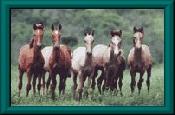 I shall confess I'm a horse lover! Especially Lusitano breed is a
passion to me. That's why i'm also a Lusitano breeder, in Portugal,
Estremadura province. Though my riding preferences, every horse breed are
suited to and make possible real ecotourism. Many cultures and civilizations
depended on their horses since the beginning of history. Mankind owes more
to the horses than to any other animal. Ancient Persians, Mongols, Parts,
Huns and Iberians, evolved on horseback. Since 3000 BC horses and ponies are
ridden, eaten, work pulling carts or ploughs, and in several ways and
places, they are irreplaceable yet today. Entering 21th century, we find
horses and ponies almost everywhere, and most countries have their own
breed(s)...What's the interest on horses for the ecotourism? First, they are
probably the best environment low-impact way of transport! In fact, horses
and ponies are part of environment, just the very same way we should. We are
considering horses and ponies until now just as riding animals, but their
uses go far beyond. They were, along with oxen, the motor-drive of progress:
pulling carts, boats on canals and ploughs, working in mines or open air, in
swamps or mountain tops, driving cattle, giving milk, leather and meat,
being trustful companions on work or battlefield. Most places wouldn't
consider horse dung as pollution, but a magnificent fertilizer. Stables can
use horse excrement to produce methane, and a single horse has potential of
1000 calories per day! After anaerobic bacterial decomposition, dung are
even better than it was before. Obviously, that gas production can be
carried on in almost latitudes where horses and ponies live. Subsequently,
methane could help to develop industries or local population well-fare. They
reproduce and are not fuel-dependent: an important issue not only for less
developed countries, but a goal on alternative and renewable energy sources
search. Native breeds usually are steady, with cheap and easy maintenance,
(grains to feed them a few days can be carried on their own back, along with
rider!), tolerating weather extremes of the places where their breed were
bred. However not always simple to "fix", they don't need
expensive imported spare parts. Generally, each country has it's own
"home-made" saddlery. Made by local artisans those articles use to
be very well adapted to autochthonous breeds, perfectly suited to local
orography and riding skills, and tending to be made of materials that are
locally available, as leather, wood, sheepskin, etc. While for many
countries, having industries that enhance employment are not a possibility,
breeding, training, and "dressing" horses can be fulfilled by
locals. There is no negative impact on environment. There is no dependency
of pollutant sources of energy, neither expensive imported parts or
knowledge. Grazing horses help to keep countryside and creates employment
for indigenous populations. Second, there are emotional and psychological
reasons to consider horses and ponies side by side with ecotourism.
Strengthened by a thousands years old relationship, on common mankind
subconscious, horses always meant trustfulness and power. It's well known -
although not yet completely explained - the positive effect that dealing
with horses has over depressed and/or disabled people. The saddle point of
view, when one seat on horseback, it's terrific to appreciate surroundings,
but it's much better to increase self-respect. If traversing wild areas, to
sit on a trustful horseback is the safest place one can find! Equestrian
holidays are so popular that several travel agencies specialized on it!
Riding is also pedagogic for kids, enabling the development of balanced
personalities. For all that exposed, I'm sure you will find serious reasons
to include riding in your holiday plans. And for sure, you will love it... I shall confess I'm a horse lover! Especially Lusitano breed is a
passion to me. That's why i'm also a Lusitano breeder, in Portugal,
Estremadura province. Though my riding preferences, every horse breed are
suited to and make possible real ecotourism. Many cultures and civilizations
depended on their horses since the beginning of history. Mankind owes more
to the horses than to any other animal. Ancient Persians, Mongols, Parts,
Huns and Iberians, evolved on horseback. Since 3000 BC horses and ponies are
ridden, eaten, work pulling carts or ploughs, and in several ways and
places, they are irreplaceable yet today. Entering 21th century, we find
horses and ponies almost everywhere, and most countries have their own
breed(s)...What's the interest on horses for the ecotourism? First, they are
probably the best environment low-impact way of transport! In fact, horses
and ponies are part of environment, just the very same way we should. We are
considering horses and ponies until now just as riding animals, but their
uses go far beyond. They were, along with oxen, the motor-drive of progress:
pulling carts, boats on canals and ploughs, working in mines or open air, in
swamps or mountain tops, driving cattle, giving milk, leather and meat,
being trustful companions on work or battlefield. Most places wouldn't
consider horse dung as pollution, but a magnificent fertilizer. Stables can
use horse excrement to produce methane, and a single horse has potential of
1000 calories per day! After anaerobic bacterial decomposition, dung are
even better than it was before. Obviously, that gas production can be
carried on in almost latitudes where horses and ponies live. Subsequently,
methane could help to develop industries or local population well-fare. They
reproduce and are not fuel-dependent: an important issue not only for less
developed countries, but a goal on alternative and renewable energy sources
search. Native breeds usually are steady, with cheap and easy maintenance,
(grains to feed them a few days can be carried on their own back, along with
rider!), tolerating weather extremes of the places where their breed were
bred. However not always simple to "fix", they don't need
expensive imported spare parts. Generally, each country has it's own
"home-made" saddlery. Made by local artisans those articles use to
be very well adapted to autochthonous breeds, perfectly suited to local
orography and riding skills, and tending to be made of materials that are
locally available, as leather, wood, sheepskin, etc. While for many
countries, having industries that enhance employment are not a possibility,
breeding, training, and "dressing" horses can be fulfilled by
locals. There is no negative impact on environment. There is no dependency
of pollutant sources of energy, neither expensive imported parts or
knowledge. Grazing horses help to keep countryside and creates employment
for indigenous populations. Second, there are emotional and psychological
reasons to consider horses and ponies side by side with ecotourism.
Strengthened by a thousands years old relationship, on common mankind
subconscious, horses always meant trustfulness and power. It's well known -
although not yet completely explained - the positive effect that dealing
with horses has over depressed and/or disabled people. The saddle point of
view, when one seat on horseback, it's terrific to appreciate surroundings,
but it's much better to increase self-respect. If traversing wild areas, to
sit on a trustful horseback is the safest place one can find! Equestrian
holidays are so popular that several travel agencies specialized on it!
Riding is also pedagogic for kids, enabling the development of balanced
personalities. For all that exposed, I'm sure you will find serious reasons
to include riding in your holiday plans. And for sure, you will love it...
Mr. Filipe Carvalho is a Telecommunications Consultant and Equestrian
Guide, and an Expert Member from Portugal. Contact him direct at http://ecoclub.com/experts/carvalho.html
Ecotourism
Planning on a Regional Level
by Mr. Desmond Kaplan
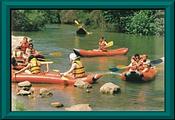 Some three years ago the Upper Galilee Regional Council initiated the
preparation of a coordinated plan for tourism and related development
together with two adjacent regional councils, the JNF (forestry authority),
the Ministry of Tourism, the Parks and Nature Authority and the Israel Lands
Authority. These bodies together with invited NGO's and local stakeholders
accompanied the planning process through representation on a joint steering
committee chaired by the project initiators. The heart of this project is to
find ways of promoting sustainable economic development, especially through
tourism, while protecting and enhancing the value of the very attractive but
sensitive natural assets of the region; these include springs and
watercourses, forests (natural and planted), various agricultural land-uses
(including pastures and extensive grazing areas), nature reserves and some
protected areas. The core of the project is about 150 square kilometers in
area. The planning team, comprising myself as team leader together with Eran
Gaash (landscaping and environmental design specialist), Dr Yoel Mansfeld
(academic and tourism specialist) and Baruch Hirshberg (transport
specialist) was selected by the steering committee from among several
competing teams. The team's proposal focused on ecotourism as a motif for
project. The planning model is based on a framework that includes the
following three principle parts:
Some three years ago the Upper Galilee Regional Council initiated the
preparation of a coordinated plan for tourism and related development
together with two adjacent regional councils, the JNF (forestry authority),
the Ministry of Tourism, the Parks and Nature Authority and the Israel Lands
Authority. These bodies together with invited NGO's and local stakeholders
accompanied the planning process through representation on a joint steering
committee chaired by the project initiators. The heart of this project is to
find ways of promoting sustainable economic development, especially through
tourism, while protecting and enhancing the value of the very attractive but
sensitive natural assets of the region; these include springs and
watercourses, forests (natural and planted), various agricultural land-uses
(including pastures and extensive grazing areas), nature reserves and some
protected areas. The core of the project is about 150 square kilometers in
area. The planning team, comprising myself as team leader together with Eran
Gaash (landscaping and environmental design specialist), Dr Yoel Mansfeld
(academic and tourism specialist) and Baruch Hirshberg (transport
specialist) was selected by the steering committee from among several
competing teams. The team's proposal focused on ecotourism as a motif for
project. The planning model is based on a framework that includes the
following three principle parts:
1. The Guide-plan: This part summarizes the results of the various surveys
that were conducted in order to understand the planning area and its
context, policy statements (including environmental management and
accountability) and tools for evaluating development projects that
entrepreneurs and agencies may propose within the prescribed framework for
the area - in other words their appropriateness to the motif of ecotourism.
This is not a statutory plan but serves to guide decision-making by both
public and private sectors.
2. The Action Plan: This part provides a list of tasks that need to be
carried out by the public sector in particular in order to promote the
objectives of the plan. These include setting up a permanent coordinating
body to monitor and manage the implementation of the plan, immediate
promotion of appropriate projects that do not require special statutory
changes, preparation and implementation of an environmental management
program (waste disposal, environmental quality and protection, etc.) for
both the private and public sectors, regional marketing activities and so
forth. The action plan also incorporates the principles of biosphere
management where the core of the biosphere is a highly protected area or
nature reserve surrounded by concentric rings of areas at varying levels of
protection and environmental management. It includes promotion of organic
agriculture.
3. The Statutory Plan: This part serves to develop and put in place
statutory tools that do not already exist but are required to achieve the
objectives of the plan. Rezoning is a common example of this. The final
drafts of the guide-plan and the action plans have been completed and
statutory plan has been submitted to the necessary agencies who have given
their preliminary comments. This has made it possible to now begin the long
process of statutory approvals. The value of the above model is that it
allows one to immediately begin implementing those parts of the plan that do
not require statutory changes. It is sometimes surprising how much can be
achieved in this way when there is leadership and a will to move things
ahead. So often this depends on effective marketing of the policy ideas that
are inherent in the plan. At this point we are in the thick of this process.
The plan can therefore be seen to be a tool for continuing activity that is
constantly developing while providing a framework that encourages and
promotes ecotourism projects by both public and private sectors, public
institutions and individual entrepreneurs.
Mr. Desmond Kaplan is an Architect and Development Planning Consultant, and
an Expert Member from Israel. Company website at: http://www.desmondkaplan.com,
Contact him direct at http://ecoclub.com/experts/kaplan.html
Sundarban
Forest - the largest mangrove forest in the world
by Mr. Sayed Hasan
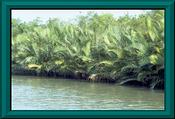 The Sundarban Forest in the Ganges-Brahmaputra delta is the largest single
patch of mangrove/estuarine forest in the world. The Forest is crisscrossed
by countless rivers, creeks and waterways. In fact it's a cluster of
islands. Sundarban is situated to the southwest corner of Bangladesh on the
Bay of Bengal. In 1997 the three wildlife sanctuaries of the Forest have
been declared World Natural Heritage sites by the UNESCO. The Government has
declared Sundarban a reserved forest. The twisted roots of mangrove trees
grow partly above ground. During high tide, twice a day, when the bed of the
forest goes under the water, the trees breathe through these roots above the
water level. This is the unique feature of a mangrove forest. Sundarban
Forest covers an area of more than 10,000 square miles. About 200-years back
its area was around 35,000 square miles. Due to onslaught of human
habitations on it, the forest area has been gradually decreasing. The first
botanical exploitation of Sundarban Forest dates back to the year of 1796.
In that year Mr. Roxburg detailed the account of plants of the Forest
collected through Dr. Buchanan Hamilton. It is estimated that Sundarban
provides a habitat for more than 450 animal species of which 47 are mammals
including 5 species of whales and dolphins; more than 270 different species
of birds; 45 species of reptiles; 200 species of fish including a rare
species of shark; and about 334 species of plants. It hosts one of the most
ferocious and strongest predators of the world, the Royal Bengal Tiger.
Sundarban has a number of endangered animals like tiger (Panthera tigris),
yellow lizard (Naranus flavescons), river terrapin (Betagns baska), yellow
monitor lizard (Naocanus flakcscons), Indian flap shell turtle (Lissemys
panctata) and the peacock soft-shell turtle (Trionyx hurum). The following
animals like Javan Rhinoceros (Rhinoceros sondieus), wild buffalo (Bubaless
bubalis), Swamp deer (Cervus duvauceli) Hog deer (Axis prociness), Gaur (Pavo
eocistatus), Gharial (Gakialis Gonggeicess) have now disappeared from the
Sunderban Forest. The other species of wildlife like spotted deer (Axis
axis), monkey (Rhesus macaque), wild boar (Sus scrota) etc. are common in
the forest.
The Sundarban Forest in the Ganges-Brahmaputra delta is the largest single
patch of mangrove/estuarine forest in the world. The Forest is crisscrossed
by countless rivers, creeks and waterways. In fact it's a cluster of
islands. Sundarban is situated to the southwest corner of Bangladesh on the
Bay of Bengal. In 1997 the three wildlife sanctuaries of the Forest have
been declared World Natural Heritage sites by the UNESCO. The Government has
declared Sundarban a reserved forest. The twisted roots of mangrove trees
grow partly above ground. During high tide, twice a day, when the bed of the
forest goes under the water, the trees breathe through these roots above the
water level. This is the unique feature of a mangrove forest. Sundarban
Forest covers an area of more than 10,000 square miles. About 200-years back
its area was around 35,000 square miles. Due to onslaught of human
habitations on it, the forest area has been gradually decreasing. The first
botanical exploitation of Sundarban Forest dates back to the year of 1796.
In that year Mr. Roxburg detailed the account of plants of the Forest
collected through Dr. Buchanan Hamilton. It is estimated that Sundarban
provides a habitat for more than 450 animal species of which 47 are mammals
including 5 species of whales and dolphins; more than 270 different species
of birds; 45 species of reptiles; 200 species of fish including a rare
species of shark; and about 334 species of plants. It hosts one of the most
ferocious and strongest predators of the world, the Royal Bengal Tiger.
Sundarban has a number of endangered animals like tiger (Panthera tigris),
yellow lizard (Naranus flavescons), river terrapin (Betagns baska), yellow
monitor lizard (Naocanus flakcscons), Indian flap shell turtle (Lissemys
panctata) and the peacock soft-shell turtle (Trionyx hurum). The following
animals like Javan Rhinoceros (Rhinoceros sondieus), wild buffalo (Bubaless
bubalis), Swamp deer (Cervus duvauceli) Hog deer (Axis prociness), Gaur (Pavo
eocistatus), Gharial (Gakialis Gonggeicess) have now disappeared from the
Sunderban Forest. The other species of wildlife like spotted deer (Axis
axis), monkey (Rhesus macaque), wild boar (Sus scrota) etc. are common in
the forest.
The Sundarban Forest has been divided into three zones according to the
level of salinity of the water. The dominant species of trees grow in the
slightly saline zone are Sundari (Heritiera fomis), Gewa (Excoecaria
agallocha), Passur (Xylocarpus mekongensis), Goran (Ceriops decandra),
Golpata (Nypa fruiticans), Kankra (Brugriera gymnosrhiza), Singra (Cynometra
ramiflora) Amur (Ammoora cuculata) etc. The moderately saline zone has the
following prominent trees: Sundari (Heritiera fomis), Gewa (Excoecaria
agallocha), Goran (Ceriops decandra), Bean (Avicennia officinalis) etc.
In the strongly saline zone the quality of the forest deteriorates and the
height of the trees hardly exceeds 7m. The forest in this zone consists of
mainly Gewa and Goran trees interspersed with dense patches of Hantal
(Phoenix paludosa). In this region Golpata is scarce. At present about 450
Royal Bengal Tigers live in this forest. For the last few years, through the
government efforts, its number has been increasing gradually. A few years
back the number of RBT decreased to about 250 only. Hunting is illegal in
Sundarban, but poachers are the main threat to the tiger population of the
forest.
Mr. Sayed Hasan is a Tour Operator and freelance journalist and President
of Pundra Tour. He is an Expert Member from Bangladesh. Contact him direct
at http://ecoclub.com/experts/hasan.html
Copyright
© 1999-2002 ECOCLUB S.A. All Rights
Reserved.
| News Contents | ECOCLUB
entrance | Ecolodges
| Experts | Ecoproducts
|
|