|
ECOCLUBing
in Dehra Dun, Uttaranchal, India |
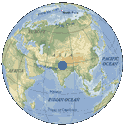 According
to legend, Lord Shiva, the Hindu Destroyer of the Universe, stomped his foot
in anger in the Dun valley. Dehra Dun (pop 370,000, alt. 695m) , meaning
"valley camp", is since November 2002 the provisional capital of
the newly created Uttaranchal state. But its history goes back at
least to 4th century BC and to a rock inscription that reveals that the Buddhist
Emperor Ashoka ruled over the area. According
to legend, Lord Shiva, the Hindu Destroyer of the Universe, stomped his foot
in anger in the Dun valley. Dehra Dun (pop 370,000, alt. 695m) , meaning
"valley camp", is since November 2002 the provisional capital of
the newly created Uttaranchal state. But its history goes back at
least to 4th century BC and to a rock inscription that reveals that the Buddhist
Emperor Ashoka ruled over the area. 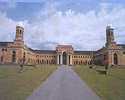 This
old centre of the Raj is surrounded by the Himalayas in the North, the
Shivalik Mountain Range in the South, the River Ganges in the East, and the
river Yamuna on the West. Many years ago the area was a huge lake. This
old centre of the Raj is surrounded by the Himalayas in the North, the
Shivalik Mountain Range in the South, the River Ganges in the East, and the
river Yamuna on the West. Many years ago the area was a huge lake.  The
Shivalik range is home to prehistoric fossils, including fossils from as
many as 35 species of elephants. The oldest known stone tool, estimated to
be three million years’ old, was also found in the area. Dehra Dun is at
the heart of a forested area and thus India's famous Forest Research
Institute (1914) was founded here. The town has for the last two hundred
years, been a major academic and research centre and a base for the Survey
of India (1767) . There are several prestigious boarding schools including
the Doon School, India's first private school and still its most exclusive
one. The town has one of the largest railway terminuses in North India. The
Shivalik range is home to prehistoric fossils, including fossils from as
many as 35 species of elephants. The oldest known stone tool, estimated to
be three million years’ old, was also found in the area. Dehra Dun is at
the heart of a forested area and thus India's famous Forest Research
Institute (1914) was founded here. The town has for the last two hundred
years, been a major academic and research centre and a base for the Survey
of India (1767) . There are several prestigious boarding schools including
the Doon School, India's first private school and still its most exclusive
one. The town has one of the largest railway terminuses in North India. 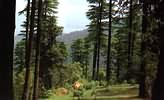 Dehra
Dun is characterised by the existence of very large forests chiefly stocked
with sal. Forest products play an important role in the economy. Besides,
supplying fuel, fodder, bamboos and medicinal herbs, they also yield a
variety of products like honey, lac, gum, resin, catechu, wax, horns and
hides. Owing to the variation in altitudes and other aspects, the flora of
the district vary from tropical to alpine species. The climate is pleasant
the whole year round, with summer temperatures ranging from 16 to 36
and Winter ones from 5 to 23. Rainfall amounts to 192 cm on average yearly. Dehra
Dun is characterised by the existence of very large forests chiefly stocked
with sal. Forest products play an important role in the economy. Besides,
supplying fuel, fodder, bamboos and medicinal herbs, they also yield a
variety of products like honey, lac, gum, resin, catechu, wax, horns and
hides. Owing to the variation in altitudes and other aspects, the flora of
the district vary from tropical to alpine species. The climate is pleasant
the whole year round, with summer temperatures ranging from 16 to 36
and Winter ones from 5 to 23. Rainfall amounts to 192 cm on average yearly.
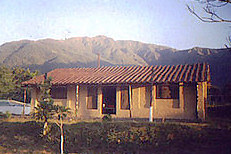 When
in Dehra Dun, stay at NatureQuest
Camp, located just outside the town, an
Ecolodge Member of ECOCLUB. NatureQuest combines environmental awareness and
tangible benefits to the local community with a unique experience for the tourist.
You will find safe, clean, dormitory type accommodation, which caters for
about 50 people, fully equipped with camp cots and full bedding according to
the season and the climatic conditions. The campsite also has accommodation
facilities in the form of Stone Cottage, Bamboo & Mud Huts that can accommodate
two people at a time. There is a common washroom with hot water running all
times along with attached Bathrooms with Stone Cottage and Couple of Mud
Huts. The campsite has connecting transport facility twice a day to Prem
Nagar, Dehra Dun which is run by local residents. Nature Quest is powered by
Solar energy, providing hot water all the time. NatureQuest only uses Solar
Lanterns at night even though electricity is available. Hot water is made
easily available courtesy of the Sun. All meals include wholesome and
healthy organic vegetarian food everyday while cooks prepare the most
sumptuous Indian meals When
in Dehra Dun, stay at NatureQuest
Camp, located just outside the town, an
Ecolodge Member of ECOCLUB. NatureQuest combines environmental awareness and
tangible benefits to the local community with a unique experience for the tourist.
You will find safe, clean, dormitory type accommodation, which caters for
about 50 people, fully equipped with camp cots and full bedding according to
the season and the climatic conditions. The campsite also has accommodation
facilities in the form of Stone Cottage, Bamboo & Mud Huts that can accommodate
two people at a time. There is a common washroom with hot water running all
times along with attached Bathrooms with Stone Cottage and Couple of Mud
Huts. The campsite has connecting transport facility twice a day to Prem
Nagar, Dehra Dun which is run by local residents. Nature Quest is powered by
Solar energy, providing hot water all the time. NatureQuest only uses Solar
Lanterns at night even though electricity is available. Hot water is made
easily available courtesy of the Sun. All meals include wholesome and
healthy organic vegetarian food everyday while cooks prepare the most
sumptuous Indian meals
 NatureQuest
has a strong community agenda: They produce their own composite for organic farming which is sold to local residents at a nominal
price, and they have built a clinic with a resident doctor to provide FREE primary medical service to local
villagers. NatureQuest are also funding a school for underprivileged children in the area and they conduct environment preservation education programs for school children and corporate employees.
(please click here
for more details) NatureQuest
has a strong community agenda: They produce their own composite for organic farming which is sold to local residents at a nominal
price, and they have built a clinic with a resident doctor to provide FREE primary medical service to local
villagers. NatureQuest are also funding a school for underprivileged children in the area and they conduct environment preservation education programs for school children and corporate employees.
(please click here
for more details)
Dehra Dun is a scenic, pollution free valley at the base of the mighty Himalayas. The Doon Valley, as it is known, is a cosmopolitan place where people, ideas and cultures come together. The climate, cultural diversity and strategic location of the Doon Valley Provide Nature Quest participants with special opportunities for study and recreation alike.
Nearby places of interest include: Robber's
Caves: amidst high mountains are narrow valleys of hot and
cold streams; Sahasra
Dhara ("thousand streams") famous for its aromatic clear water
which is said to cure many skin ailments; the Wadia
Institute of Himalayan Geology: the
best centre on Himalayan geology, this Institute maintains a museum
displaying the geological diversity of the sub-continent; Malsi
Deer Park: situated on the Mussoorie road 4 kms away from
Dehra Dun, this park is famous for its deer, monkeys and many rare birds.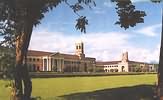 Forest
Research Centre and University: This center is on the Dehra
Dun-Chakrata Road 5 kms away. This University is one of its kind in Asia.
Spread over 11,000 acres of land it is very popular among tourists. Film
Directors often come here to shoot their films.
The Institute maintains six museums, covering various disciplines; Tapkeshvar
Temple: 5.5km away from Dehra Dun a popular Hindu
pilgrim centre and the venue of an annual fair held on Shivratri, which
celebrates Lord Shiva’s marriage with Parvati. Cool sulphur springs around
the temple make excellent bathing spots for pilgrims; Forest
Research Centre and University: This center is on the Dehra
Dun-Chakrata Road 5 kms away. This University is one of its kind in Asia.
Spread over 11,000 acres of land it is very popular among tourists. Film
Directors often come here to shoot their films.
The Institute maintains six museums, covering various disciplines; Tapkeshvar
Temple: 5.5km away from Dehra Dun a popular Hindu
pilgrim centre and the venue of an annual fair held on Shivratri, which
celebrates Lord Shiva’s marriage with Parvati. Cool sulphur springs around
the temple make excellent bathing spots for pilgrims; 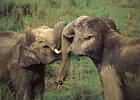 Rajaji
National Park: consists of three sanctuaries, Rajaji, Motickur and Chilla.
Visitors may see elephants, leopards, sloth bears, striped hyenas, spotted deer and
a great variety of birds. Rajaji
National Park: consists of three sanctuaries, Rajaji, Motickur and Chilla.
Visitors may see elephants, leopards, sloth bears, striped hyenas, spotted deer and
a great variety of birds.
A little further afield one may visit Chakrata:
located at a height of 2,135m, the place offers an excellent view of the
Himalayas, Roorkee:
India's first canal town, famous for its Institute of Technology (1847). Saharanpur:
little town founded in 1340, summer getaway for the Mughals, now woodcarving
centre Kalsi:
has an edict inscribed on a rock, carved on the orders of the Buddhist
Emperor Ashoka in the 3rd century B.C. Mussoorie:
at 2000 m. the nearest hill station to Delhi and popular with Indian
Tourists Haridwar:
ancient town and one of the seven holy cities of Hinduism.
 Among
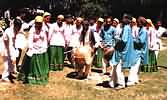
the many local
fairs we may mention the Bissu
Fair which reflects the cultural heritage and tradition of
Jaunsari tribe and marks the harvesting season in the area. Also, Mahasu
Devta's Fair held at Hanol Among
the many local
fairs we may mention the Bissu
Fair which reflects the cultural heritage and tradition of
Jaunsari tribe and marks the harvesting season in the area. Also, Mahasu
Devta's Fair held at Hanol  which
is about 120 kms on the Chakrata Tyuni road and takes place in August
every year, when Mahasu Devta (a deity) is taken out in a procession. Musical
prayers continue for three days and nights. which
is about 120 kms on the Chakrata Tyuni road and takes place in August
every year, when Mahasu Devta (a deity) is taken out in a procession. Musical
prayers continue for three days and nights.
* For
more details on this exciting part of India please visit the NatureQuest website
and contact
NatureQuest
Copyright © 1999-2002 ECOCLUB
S.A. All Rights Reserved.
| News Contents | ECOCLUB
entrance | Ecolodges
| Experts | Ecoproducts
|
|