|
Director’s Cut: Tourism &
Travel as a Human Right
Speaking
at a European Greens Conference on Tourism & Climate
change in early July, and replying to a suggestion from the audience
calling for a reduction of international travel on the grounds of the
environmental impact of air travel, and in favour of local travel, I
pointed that it would be too difficult, for example to convince the
millions of Indians and Chinese not to travel abroad, and that it would
be unfair as Travel is after all a human right - this provoked an
immediate "no it's not" reaction from an air travel expert in the
audience. What I meant of course,
was that in my view, and hopefully in the view of the millions
working in Tourism around the world, it is a human
right.
I agree that the average tourist does not really think of travel as a
right, unless
of course someone (say a totalitarian regime, or an excessively austere
Visa regime) tries to take it away from them.
But
it also happens to be the view
of the United Nations
World Tourism Organisation (UNWTO). In the UNTWO's - Global Code of Ethics for Tourism
(1999 -
2001) the right to Tourism is clearly described as follows:
Article
7 Right to tourism
(1) The prospect of direct and personal access to the discovery and
enjoyment of the
planet’s resources constitutes a right equally open
to all the world’s inhabitants; the
increasingly extensive participation in national and international
tourism should be
regarded as one of the best possible expressions of the sustained
growth of free time, and
obstacles should not be placed in its way;
(2) The universal right to tourism
must be regarded as the corollary of the right to rest
and leisure, including reasonable limitation of working hours and
periodic holidays with
pay, guaranteed by Article 24 of the Universal Declaration of
Human Rights and Article
7.d of the International Covenant on Economic, Social and Cultural
Rights;
Article 8 Liberty of tourist movements
(1) Tourists and visitors should benefit, in compliance with
international law and national
legislation, from the liberty to move within their countries and from
one State to another,
in accordance with Article 13 of the Universal
Declaration of Human Rights; they should
have access to places of transit and stay and to tourism and cultural
sites without being
subject to excessive formalities or discrimination;
While
the Universal
Declaration of Human Rights (1948) states that
Article 13.
(1) Everyone has the
right to freedom of movement and residence within the borders of each
state.
(2) Everyone has the
right to leave any country, including his own, and to return to his
country.
Article 24.
Everyone has the right to rest and leisure, including reasonable
limitation of working hours and periodic holidays with pay.
In
addition, the International Covenant on Economic, Social
and Cultural Rights (1966)
Article 7
The States Parties to the present Covenant recognize the right of
everyone to the enjoyment of just and favourable conditions of work
which ensure, in particular:
(a) Remuneration which provides all workers, as a minimum, with:
(i) Fair wages and equal remuneration for work of equal value without
distinction of any kind, in particular women being guaranteed
conditions of work not inferior to those enjoyed by men, with equal pay
for equal work;
(ii) A decent living for themselves and their families in accordance
with the provisions of the present Covenant;
(b) Safe and healthy working conditions;
(c) Equal opportunity for everyone to be promoted in his employment to
an appropriate higher level, subject to no considerations other than
those of seniority and competence;
(d ) Rest, leisure and reasonable limitation of working hours and
periodic holidays with pay, as well as remuneration for public holidays
All
these declarations, of course were not
born in a vacuum. In medieval England, the Magna Carta (1215) said
something familiar:
Article 42
It
shall be lawful to any person, for the future, to go out of our
kingdom, and to return, safely and securely, by land or by water,
saving his allegiance to us, unless it be in time of war, for some
short space, for the common good of the kingdom: excepting prisoners
and outlaws, according to the laws of the land, and of the people of
the nation at war against us, and Merchants who shall be treated as it
is said above. (For Latin fans: XXXXII. Liceat
unicuique decetero exire de regno nostro, et redire, salvo et
secure, per terram et per aquam, salva fide nostra, nisi tempore gwerre
per aliquod breve tempus, propter communem utilitatem regni, exceptis
imprisonatis et utlagatis secundum legem regni, et gente de terra
contra nos gwerrina, et mercatoribus, de quibus fiat sicut predictum
est. )
Going
further back, in many ancient
civilizations the Traveller is someone sacred,
protected by the most powerful gods, for example Yacatecuhtli (Aztec),
Odin (Nordic), Zeus (Greece), Hasamelis
(Mesopotamia), while everyone is aware of the close relation between
tourism & travel, politics, ethics/religion in important
ancient events such as the Olympic Games.
If/when
the Universal Declaration of Human
Rights comes up
for revision, it should explicitly state the right to Tourism &
Travel as a basic human right for all, accessible by all, and encourage
all states to guarantee it to all their citizens. Travel and open
borders (for humans not just for capital) are
the best recipe for a multicultural and multipolar world with less
strife, nationalism and racism. Ecological tourism and tourism
for the masses are perfectly compatible, to deny this is simply
elitist, undemocratic and, frankly, irrelevant, it will happen!
 More
Director’s Cut More
Director’s Cut
|
Obituary - Chandra de Silva, Director/CEO of
Ranweli Holiday Village
 Chandra de Silva, an ECOCLUB Member since 2002,
a pioneer of Ecotourism in Sri Lanka passed away on Tuesday 10th June.
I am very sad that I never got the chance to meet him in person but
grateful that I had the honour of interviewing him for our magazine.
His views against greenwashing, on the incompatibility of luxury with
ecotourism, on treating employees as partners, on the importance of
constant education and improvement, are still very relevant today. I am
also grateful that our Members gave him the joy of voting Ranweli
Holiday Village as the winner of our first
ever Awards in 2004. The project which
involved the creation of an organic vegetable plot and green house in
school premises close to the Lodge, as all things that Mr de Silva was
involved with, was implemented in a thorough, enthusiastic and
scientific way. Besides turning (and maintaining) what was once a beach
resort into a multi-award winning Ecotourism facility, he found time to
be the founder President of the Ecotourism Society of Sri Lanka, Vice
President of the Child Protection Society of Sri Lanka, a Board member
of the International Ecotourism Society (TIES), a Fellow of the Royal
Geographic Society (FRGS, UK), a member of the National Geographic
Society Panel of Experts on sustainable Tourism and Destination
Stewardship, a keynote speaker at several International conferences
dealing with Ecotourism and a visiting lecturer at the University of
Sri Jayawardenapura. This is a great loss for the Ecotourism movement
and for Sri Lanka. Let us also hope that peace will soon prevail in his
beautiful island and that his able colleagues and the new generation of
Sri Lanka's Tourism will follow in his footsteps and continue his hard
work for a better tourism and a better world. The Ecotourism Society of
Sri Lanka has created a
memorial fund for the benefit of the Child Protection Society of
Ceylon - Antonis B. Petropoulos Director, ECOCLUB Chandra de Silva, an ECOCLUB Member since 2002,
a pioneer of Ecotourism in Sri Lanka passed away on Tuesday 10th June.
I am very sad that I never got the chance to meet him in person but
grateful that I had the honour of interviewing him for our magazine.
His views against greenwashing, on the incompatibility of luxury with
ecotourism, on treating employees as partners, on the importance of
constant education and improvement, are still very relevant today. I am
also grateful that our Members gave him the joy of voting Ranweli
Holiday Village as the winner of our first
ever Awards in 2004. The project which
involved the creation of an organic vegetable plot and green house in
school premises close to the Lodge, as all things that Mr de Silva was
involved with, was implemented in a thorough, enthusiastic and
scientific way. Besides turning (and maintaining) what was once a beach
resort into a multi-award winning Ecotourism facility, he found time to
be the founder President of the Ecotourism Society of Sri Lanka, Vice
President of the Child Protection Society of Sri Lanka, a Board member
of the International Ecotourism Society (TIES), a Fellow of the Royal
Geographic Society (FRGS, UK), a member of the National Geographic
Society Panel of Experts on sustainable Tourism and Destination
Stewardship, a keynote speaker at several International conferences
dealing with Ecotourism and a visiting lecturer at the University of
Sri Jayawardenapura. This is a great loss for the Ecotourism movement
and for Sri Lanka. Let us also hope that peace will soon prevail in his
beautiful island and that his able colleagues and the new generation of
Sri Lanka's Tourism will follow in his footsteps and continue his hard
work for a better tourism and a better world. The Ecotourism Society of
Sri Lanka has created a
memorial fund for the benefit of the Child Protection Society of
Ceylon - Antonis B. Petropoulos Director, ECOCLUB
|

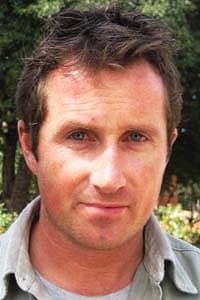  The ECOCLUB Interview
with
Angus Begg The ECOCLUB Interview
with
Angus Begg
Photojournalist
& Broadcaster, South Africa
"Travel journalism:
it's very much about sunsets and
cocktails, with the 'freebie mentality' still ruling, especially in
newspapers and magazines. The notion that travel touches every part of
daily life, from politics to religion and the condition of our roads,
is unpopular (and caused me to lose my drive-time travel slot on
national 'public service' radio)"
Having grown up between Canada,
the UK and South Africa, Angus Begg has
been travelling for fair chunks of his adult life too. Working as a
photojournalist and a broadcaster, his travels have taken him through
the fields of current affairs and travel, from the genocide in Rwanda
to the Serengeti migration, tea with Buddhist monks in Darjeeling,
hiking New Zealand and reflecting on Poland’s Auschwitz. As news editor
he helped set up SABC Africa (DStv) and today works as a
producer/director for MNet’s Carte Blanche and columnist for South
Africa’s Business Day weekly newspaper, The Weekender. He also
contributes to various magazines; Getaway, Travel Africa and CNN
Traveller.
(The Interview follows:)
ECOCLUB.com: You have travelled and worked
in many African countries. Which of these have in your view developed a
tourism model that approaches ecotourism ideals such as minimising its
own environmental impact, funding environmental conservation, reducing
poverty, respecting human rights, promoting knowledge &
understanding, and why?
Angus Begg: The first
project I saw of significance was outside Zambia’s South Luangwa
National Park, involving tourists staying in a village, amongst the
villagers. The only concession was that option of a 'real'
bed, (as
developed-world westerners understand them) as opposed to the local,
harder options. This was in 1992, and tourists then paid US$40 for the
experience. Encouraging was the fact that the lodges at which they were
staying encouraged this interaction – they knew how important it was
for conservation and wildlife tourism to be seen to be working for the
villagers. Since then I have come across two of the most fantastic
ecotourism models:
One is a place called Bulungula Lodge, on
South
Africa’s Wild Coast (Eastern Cape province). It’s officially in the
poorest district in the country, Elliotdale, where service delivery
hasn't improved one iota since the election of SA's first democratic
government – children still die of diarrhoea because of filthy water,
clinics too far away and roads so bad they're impossible to make use of
in an emergency. Against this background financial services graduate
Dave Martin and his wife, Rejane – chief economist for a major
insurance group – have established a backpacker lodge that has been
voted by Lonely Planet as one of the top ten places to see in SA. What
distinguishes this from other ecotourism ventures (a loosely
used term) is the extent to which local people are involved; they work
at the lodge, they have a share in it (virtually part of the village,
there is no theft, and the guests and visiting villagers share space in
the main building) they run tourist-related businesses that supply
services to guests such as fishing and cultural tours. It also runs on
solar and
wind-power, uses compost toilets, and has a remarkable water-saving
shower device driven by paraffin – bit like a rocket!
The second is
Grootbos Private Nature Reserve. At the other end of the luxury scale,
with five stars, its impact has been huge. It all starts with caring
for the smallest and most diverse floral kingdom in the world – the
Cape Floral Kingdom (it has 1,300 plant species per 10,000 km2 - the
nearest rival, the South American rain forest, has a concentration of
only 400 per 10,000 km2). It boasts an on-site college that enables
kids from surrounding impoverished areas, who haven't even finished
school, to qualify for further studies at a Cape Town technikon
(technical university). They sell plants from the college nursery,
raising considerable funds, and the best students every year go to
Cornwall’s Eden College for practical work. From that has grown a
soccer project, looking forward to the 2010 World Cup in South Africa,
which has attracted serious international sponsorship and developed
into a community centre serving all sports and with (apparently) the
only soccer astroturf pitch in Africa.
ECOCLUB.com: What
share of tourism
accommodation facilities in Africa is actually in the hands of locals
and communities as opposed to foreign-controlled companies? Does it
matter?
Angus
Begg: I believe the vast majority are locally
owned. Provided the ethics and business practice are sound and that
money is ploughed back into the country, I see no problem with
it.
ECOCLUB.com: And
does domestic tourism also play a significant part in South Africa? In
what way is it different than international tourism?
Angus
Begg: Domestic
tourism is the bread and butter of any country. Look at how America had
to look inwards post 9/11. With South Africa susceptible to an often
misinformed international population - people who actually think a
disturbance or conflict in Kenya or a plane crash in Cameroon has
something to do with SA, and book their travels accordingly – South
Africa has to be locally aware.
ECOCLUB.com:
As
a winner of the 2006 CNN Africa Journalist Awards, how satisfied are
you with the quality of Journalism and Travel Journalism in particular
in Africa - investigative or picture perfect? and in which countries?
How easy is it really for a travel journalist to write a negative
review and not suffer the consequences?
Angus
Begg: The
South African government has since a few years into independence been
taking shots at the independent media, which continued holding
government to account – as it did with the previous government. But as
with the Sandinistas in Nicaragua (post the Somoza dynastic autocracy),
the African National Congress (ANC) government doesn’t like to be held
to account. The standard of journalism has dropped, I believe,
especially in the electronic media, where disinformation and government
propaganda has once again become the order of the day. Travel
journalism: it’s very much about sunsets and cocktails, with the
‘freebie mentality’ still ruling, especially in newspapers and
magazines. The notion that travel touches every part of daily life,
from politics to religion and the condition of our roads, is unpopular
(and caused me to lose my drive-time travel slot on national 'public
service' radio).
If I am hosted by a company etc, I put it to
them that
I have to write it as I see it – my take is that they have the
opportunity for pure editorial, if they screw it up it’s their fault.
Some people find that fair, others just want advertorial. The major
problem is that publishers and broadcasters, despite generally making
huge profits, aren’t interested in paying for decent content (I’m paid
the same rate today as I was 7 years ago by the biggest publishing
group in the country, which is still chaired by a former trade unionist
/ senior ANC office-bearer). They'd rather be offered a trip and give
it to someone in the office who deserves a trip; there is no cost to
the company, the journo feels happy as he gets wined and dined and he
will produce what often turns out to be inane product. I could give
many examples!
ECOCLUB.com: What
is your take on the blogging phenomenon, and anonymous journalism? Is
it a fad or here to stay? Does it liberate/emancipate or degrade/erode
the journalism profession?
Angus
Begg: I’m
embarassed to say that I’m not that familiar with it. I have yet to
enter the world of blog (which sounds like a dirty, dark planet)! It
can both liberate and erode the profession, but I suppose it does offer
choice, and if people don’t like it, they won’t search it out. I reckon
it must be here to stay – what do you think ? Should I have one
??!!
ECOCLUB.com:
You
were there, when the Rwanda genocide took place. Can it happen again?
Has Tourism recovered? Has it played a meaningful role in
reconciliation, equal to the one Paul Rusesabagina - immortalised by
the Hotel Rwanda film - played during the events? Briefly
surveying official and private Rwandan tourism websites, we did not
find any reference to the massacre. Is it best kept a taboo, or should
tourists (and locals) never forget through museums and monuments, as is
the case with massacres in other countries and parts of the
world?
Angus
Begg: It
can, and has happened again - in Kenya. Africa is an essentially feudal
environment, and many of its rulers have no real interests in changing
things, because unfortunately many of them seem to enjoy the notion of
eternal power. Look at speeches by such leaders – and I think it’s
relevant for the whole developing world – and you will notice unusually
common reference to the term ‘power’. Tourism is in the process of
recovering in Rwanda, and the big investment by East African hotel
giant Serena (owned by the Aga Khan) speaks volumes, especially with
general instability continuing in DRC and Burundi. A number of
international NGOs are helping to resurrect the industry in Rwanda, in
some cases – like Nyungwe Forest – creating tourist infrastructure for
the first time. It’s pioneering stuff, and an amazing place to visit.
Taboo subject? ‘m not sure if I met many Hutu’s, as everyone refers to
themselves as “Rwandan, not Tutsi or Hutu” - I was looking because all
the new restaurants and coffee shops and tour operators I spoke to were
children of the Tutsi exiles of 1959, who had returned to their country
with money after 1994. I would like to know how Hutus feel about the
reconciliation process, and the ‘oneness’, but nevertheless didn’t
encounter any hostility from the people I met. There is a strong sense
of discipline around, and government is simplifying legal requirements
for foreigners wishing to come in and do business and help get the
country on its feet again. With the highest population per capita in
Africa Pres Paul Kagame knows he has to make tourism work.
ECOCLUB.com: Mandela,
still going strong at 90, is considered by many as the world's greatest
statesman alive. Has South Africa, with reference to its Tourism
sector, and in the light of the recent anti-immigrant events, made an
equally great progress over the past 15 years, in tackling racism,
poverty & disenfranchisement? Could the Tourism sector generate
more jobs for locals in the cities?
Angus
Begg: For
good reason Mandela was just too late for us, with government now beset
by corruption and a general lack of leadership. The tourism industry in
SA has made strides, with some – like Dave at Bulungula –
doing
their best to help the less privileged. Some top-end lodges and hotels
blow the horn of 'ecotourism' and providing employment louder than
others, often facilitating access to capital through international
connections. This can be a good thing, such as the example of Dr X from
Boston or Zurich building an eye-clinic in a rural province. But the
negative is that such establishments inevitably charge more per night
than the cleaner will earn in six months, which I feel does nothing to
do away with the generally black and white - 'us and them'- divide (as
opposed to the Bulungula example). Increasingly you find 'black
diamonds' - the newly-monied black class, who often (but not always)
arrive at their news status courtesy of government patronage – also
frequenting such establishments, as a way of announcing their
'arrival'. This further entrenches the feudal notion still prevalent in
Africa, that he with the money and economic power (no matter how it was
gained) - more importantly he who is seen to have it - is king.
Government
has failed the industry dismally in many instances, especially the Wild
Coast, where long-term sustainable tourism operations willing to pump
in tons of cash have been put on hold for years, eventually chasing
away the potential, well-intentioned investor. This has cost countless
jobs in a woefully poverty-stricken, beautiful province. It turns out
in this particular instance that various interested government
officials have been holding up the process, hoping to pave the way for
an Australian mining firm to step in and plunder the resource-rich
coastline. How do I know? A colleague produced the investigative TV
programme on it recently, and I've followed the story for years; four
years ago (that's how long the story's been happening) I walked that
coastline while seeing what had become of the EU's R84 million (abut
US$10 million at the time) that had been pumped into the area. It just
vanished. Today it's more about greed - one black brother stealing from
another - than racism.
The
wave of xenophobia sweeping the country needs to be put in some form of
context: it has been a long-time coming. In a nutshell: South Africa's
borders are porous, and with much of Africa still ruled by despots
('democracy' is a very qualified concept in this part of the developing
world) the continent's beleagured citizens and refugees
head south
in search of both security and opportunity. Zimbabweans and Malawians
especially are hired easily in South Africa, as they are known for
pleasant and willing dispositions; Zimbabweans are often well-qualified
(roughly three million having fled their own country), meaning –
whether illegal or not - they get jobs quickly. The local workforce
remains highly politicised. Many can't differentiate between being 'of
service' to servitude (historical legacy), and thus would sometimes
rather work only begrudgingly. So when economic times are tight, as
they are now, and jobs are scarce, ignorance and intolerance reign –
and black Africans turn on their brothers.
Just yesterday, I was at a
top guest-house in Cape Town, that has long had Congolese French
waiters (the owner is originally French). They tell me that locals will
target them because they have a different (darker) look, don't speak
English well and dress in a particular fashion, thus they prefer to
live in largely white areas – for safety's sake. Government has sat
idly and watched (only lately sending in troops to help police in
troubled areas), with our President overseas and even our
president-in-waiting preferring not to get involved. They dare not be
seen to be even vaguely sympathetic towards foreigners as it will cost
them votes among the masses. That people have died, the same people who
came to our country fleeing violence, poverty and persecution – seeking
safety - is tragic beyond words. Luckily for the industry – although
international TV news has flashed coverage of the events around the
world - these incidents have been taking place light years from the
tourist beds. Tourism still has great potential in South
Africa,
and billions are being spent on infrastructure for the World Cup in
2010, so more jobs will be created. My worry is that we lack both
visionaries in government, and competence in key areas; to
ensure
that our electricity networks will always work, that such xenophobia is
dealt with.
My
hope is that once the 'magical' date of 2010 has passed, with the smoke
and mirrors and the image of the feel-good parade having moved on, we
will have a sustainable tourism industry to work with. Government and
private tourism departments are almost entirely politically appointed
and inefficient (generally speaking), with employees joining the
industry to go shopping at international trade shows and backhanders
being the order of the day. But at the proverbial end of the day we
have three things going for us: a phenomenal natural environment,
strong private sector, packed with experience and knowledge, that
drives the industry and draws the tourists, and - despite the pockets
of intolerance in the urban, underprivileged areas – a largely warm and
welcoming people out in the country. That's what people come to see.
ECOCLUB.com:
In
what was a milestone for African environmentalism, Wangari Maathai won
the Nobel in 2004. However many think that the environment is still a
luxury in Africa, that rapid progress is paramount in the light of
abject living conditions. If that is so, is high-end eco-friendly
tourism, even though it may be elitist and a form of tourist apartheid,
an honourable & useful compromise, or is it a drop in the
ocean?
Angus
Begg: It's
one form of making it work, as in Botswana's Okavango Delta, but is it
right if it deprives locals from the experience altogether? I believe
how people are treated is key to such operations, whichever end of the
scale they may be on. My jury is still out on this one, although the
experiences of Bulungula and Grootbos again refer...
ECOCLUB.com:
In
the light of frequent air disasters and arduous flight connections, it
has been argued that Africa needs a dense network of subsidised, safe
air routes. Do you agree?
Angus
Begg: What
about cheap, reliable, ecological public transport (trains, buses) for
the masses? Viva! The masses wish for reliable public transport, but it
aint comin' anytime soon. We decided to spend R21 billion (at the time
about US$3 billion) on an arms deal - which has both our future and
existing presidents implicated in corruption – instead of exactly the
proposal you raise.
ECOCLUB.com:
What
is your evaluation on the new scrummage / cold war for Africa and its
resources between the worlds superpowers? Should Africa be given a fair
chance through the removal of subsidies in the west, and then left
alone to heal its wounds and stand on its own feet, or does it forever
need the peace & war corps of investment, aid, ngos,
bureaucrats, arms-traders, missionaries, preferential arrangements,
cheap imports...?
Angus
Begg: Take
a peek at China's scramble for Africa's resources. It is providing
infrastructure all over Africa in return for much of its energy
resources. Some call it looting, and their attitude to labour rights is
indeed questionable to westerners, but they are nevertheless providing
Africa with what Western aid has for decades failed to deliver
effectively (money goes into corrupt political pockets or its tied to
sometimes unsustainable World Bank targets). Yes, subsidies should be
removed in the west – traditional western powers made fortunes by
looting Africa, now they have to let Africa play too, by playing fair.
Although internal political power plays in the likes of the US and EU
make such a prospect unlikely. As for that list of parties you
mentioned, they are often an industry in themselves – sometimes more
important than the 'cause' they claim to be interested in.
ECOCLUB.com:
From
80's South Africa to Palestine and Rwanda, you have covered politics
& strife but also tourism and the environment and been through
places & situations most of us only see in the movies. 'Wise as
you
will have become, so full of experience', as the poem goes,
have you ever considered crossing the street and participating in
politics, or are you gradually finding your way back to your 'Ithaca'?
Angus
Begg: I'm
not sure about 'wise', although 'experience' I will concede I have
gained. I'm a touch of a malcontent right now, frustrated by worsening
corruption and displays of power in a country that had the chance to
choose the high road after the '94 elections, but didn't, instead
choosing to support the morally reprehensible Zimbabwean despot, Robert
Mugabe, and turn a blind eye to corruption locally. Just this past
weekend it has been announced that – despite overwhelming public
sentiment to the contrary – that the highly effective National
Prosecuting Authority will be disbanded. This is largely because it has
been successful in investigating senior ANC (government) figures. I am
fast realising through my TV work that we live here in a qualified
democracy, and that inefficiency, greed and corruption won't see the
ANC government removed from power. That's our legacy – the masses will
vote according to colour because they were largely deprived of
education and stick with what they know – even if it's a perspective no
greater than over the hill in the neighbouring village - which
perpetuates the feudalistic existence. So politics is not on the
horizon (as is working as a political journalist in such an
environment)! Being just post 40 and a white male doesn't help finding
work in South Africa, no matter personal history and experience, so
let's say I'm looking around for opportunities, whether in travel,
photography, commentary or some related business. Somewhere therein
perhaps lies my Ithaca. I've just moved to Cape Town, so at least I'm
looking at this amazing mountain (Table) as I write, ocean and
vineyards just a little further away ... pondering an uncertain future!
ECOCLUB.com: Thank you very much!
Find the
complete list of ECOCLUB Interviews here
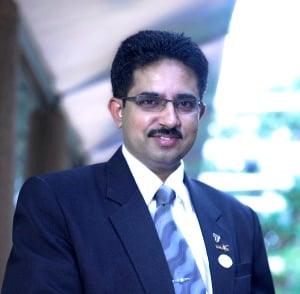 The ECOCLUB Interview with Dr
Vikneswaran Nair
The ECOCLUB Interview with Dr
Vikneswaran Nair
President, Asia-Pacific
Council on Hotel, Restaurant & Institutional Education
(APacCHRIE)
"Golf
course
development
is now emerging as a major environmental issue in Asia"
A
graduate of University Putra Malaysia (UPM), Dr. Vikneswaran (Vic) Nair
completed his Ph.D. in Systems Engineering with his research on
developing an expert system for ecotourism accreditation and rating for
Peninsular Malaysia. At present, he heads the Centre for Research and
Development at Taylor’s University College Malaysia and a Senior
Lecturer at the Taylor’s School of Hospitality and Tourism. Dr. Vic
Nair has more than 12 years experience in the field of application of
Information & Communication Technology in Hospitality &
Tourism, Sustainable Tourism, Ecotourism Management and Environmental
Management. He is also an adjunct lecturer for many public universities
in Malaysia, and also has conducted guest lectures on responsible
tourism and ecotourism management for the graduate programme at the
University of Toulouse, France, Rikkyo University, Japan and Institute
for Tourism Studies (IFT), Macau.
A seasoned researcher and consultant with more than 100 publications to
his credit, he was accorded the Merit Award for Academic Leadership and
Accomplishment as the Outstanding Young Malaysian of the Year organised
by Junior Chambers International, for his contribution to the
ecotourism industry of Malaysia in 2006 and other awards including
Taylor’s Chairman’s Staff Excellence Award for Academic Excellence
(2002) & Research Excellence (2007) and Best Paper Award for
Tourism Research in the Malaysia's Third National Tourism Educators
Conference (2004).
ABOUT
TAYLOR'S UNIVERSITY COLLEGE MALAYSIA
Since its establishment in 1969, Taylor's University College Malaysia
(Web: http://www.taylors.edu.my)
has
expanded from its main location in Subang Jaya, to include four
additional campuses extending throughout the area surrounding its main
campus including Taylor's College School of Hospitality and Tourism
(TCHT). With over twenty years of experience, TCHT today is one of
South East
Asia’s largest and most established hospitality and tourism management
colleges providing quality
education and training to thousands of students. In 2007, TCHT clinched
the prestigious Hospitality Asia Platinum Awards (HAPA) for Hospitality
School of the Year 2007-2008 (Malaysia Series). The school offers
industry-acclaimed diplomas, higher diplomas, degrees and professional
Master Degree from the Academie de Toulouse and University of Toulouse
in France.
(The
Interview follows:)
ECOCLUB.com:
How
did you end up discovering and specialising in Ecotourism as an
Academic, and how has your understanding evolved over the recent years?
Vic Nair: It is by
accident that I
ventured into the world of ecotourism. I have always had the passion
for ecology and environment even when I was young. I have always
enjoyed roughing out in the nature, doing jungle trekking, camping at
the beachfront and other nature based tourism activities. Upon
completing my Bachelor Degree in Horticulture, I spend 2 years in the
plantations in Batang Berjuntai. In 1996, I was offered by University
Putra Malaysia to carry out a research to design an expert system to
manage the terrestrial vegetation impact in carrying out the
Environmental Impact Assessment.
Upon graduation in 1998, I was offered a job in Taylor’s School of
Hospitality and Tourism. Thus, Taylor’s College was indeed my eye
opener to the magnificent world of Tourism. Thus, I continued my PhD
thereafter in developing another expert system for rating the
ecotourism industry of Malaysia. With my strong ecological background,
I had little trouble to complete my PhD in 2003. Hence, I was involved
in many researches and consultancy work in the field of tourism and
have published many articles and papers in many forums nationally and
internationally. Subsequently my interest and understanding evolved
from nature tourism to sustainable tourism to responsible tourism.
ECOCLUB.com:
You
have also extensively studied Ecotourism Certification &
Rating. What is your overall evaluation of its usefulness and
implementability in Malaysia, compared to other countries in the
Asia-Pacific region?
Vic Nair: There are
approximately about
500 potential or existing ecotourism sites in Malaysia as reported by
WWF in their report for the National Ecotourism Plan in 1996. In
addition, there are many agencies managing ecotourism in Malaysia which
make the coordination and standardisation of all the code of practices
a challenge.
At national level, the main government bodies relevant to ecotourism
are the Ministry of Tourism, Tourism Malaysia (Malaysia’s tourism
promotion arm), Ministry of Agriculture, including the Department of
Fisheries (for Marine Parks), Department of Agriculture (for agro
tourism which is related to ecotourism) and Department of Irrigation
and Drainage (for river management). Within Peninsular Malaysia, other
very important government bodies over seeing ecotourism resources and
service provisions are the Department of Wildlife and National Parks
(for national parks, wildlife reserves and sanctuaries and protection
of wildlife), the Forestry Department with the constituent state
forestry departments (for recreational forest), the State Governments
(eco-sites within the boundaries of a state), the Economic Planning
Unit and State Economic Planning Units, other departments and agencies
such as the Department of Aboriginal Affairs, Veterinary Services
Department, Forest Research Institute of Malaysia, the Malaysian
Fisheries Development Board and universities.
Thus, with some many National Tourism Organisations (NTO) involved in
managing ecotourism, a standardised certification and rating become
more and more important in Malaysia compared to other Asia Pacific
region where the NTO structure is not so complicated.
Therefore, it can be said that the main problems in the current
practice of ensuring sustainable development of the ecotourism industry
in Malaysia are: lack of
effective and proper approaches for efficient sustainable management
practice of the ecotourism site, lack of enforcement in ensuring the
ecosystem is sustained; insufficient environmental cum ecological
expertise that incorporates the fundamental of safety, health and
environment; lack of consistent approaches in implementing a mitigation
measures and in satisfying the requirement of national environmental
regulatory authorities; the large number of small organisations
involved in tourism and their related fields make the effort to collect
data from them both costly and time-consuming, resulting in unreliable
and incomplete ecotourism databases.
Hence, a reliable and consistent rating system and database system is
required to ensure the sustainability of these ecotourism sites, which
can be used for intelligent decision-making. A systematic rating system
is developed to maintain a certain level of standards.
IIn order to make ecotourism development sustainable with minimum
impact on the nature, it is important that all ecotourism sites are
evaluated and rated in terms of importance and attractiveness.
Nonetheless, with the complex bureaucracy and the organization of the
NTO in Malaysia, the implementability of this certification and rating
is dictated by the political party in power and the Minister who
manages his/her Ministry for a period of 4-5 years before being
replaced with another Minister who has his or her own vision during the
period of his/her term as a Minister.
Thus, the industry suffers. Since completion of my study in developing
an ecotourism rating system for Peninsular Malaysia in 2003, five years
later today, there is still no concerted effort done to check and
balance the fragile ecotourism industry in Malaysia. A comprehensive
National Ecotourism Plan that was prepared by WWF in consultation with
the ecotourism guru, Architect Hector Ceballos-Lascurain for the
Ministry of Tourism, Malaysia in 1996 was not utilized to the maximum
to effectively manage the ecotourism industry in Malaysia. Today, the
Ministry of Tourism is inviting potential consultants and academicians
to re-work on the National Ecotourism Plan. What will happen after this
report is completed is everybody’s guess.
ECOCLUB.com: What are the main
challenges for Tourism and the Ecotourism movement in Malaysia
today, and how suitable and 'eco' are related current state and federal
government policies?
Vic
Nair: The
current Government policies, both the State and the Federal, need to
further holistically focus on the impact of over-development on
ecotourism destinations. 50 years ago Malaysia was a destination of
eco-paradise with beautiful and coral rich beaches and one of the
world's oldest tropical rain forests. The diversity of its flora and
fauna is a result of undisturbed evolution over 130 million years.
Malaysia has plenty of
natural attractions to satisfy even the most discerning of adventure
seekers. With the South China Sea and the Indian Ocean lapping its
shores, there is an enormous variety of flora, fauna and marine life to
be enjoyed. Ecotourism has become a major enterprise in Malaysia in the
last decade. Several pristine rain forest areas have now, been turned
into national parks and recreational parks. Total Protected Areas in
the Peninsular Malaysia has dwindled with the major areas still in the
Borneo Island of the Eastern Malaysia (Sabah and Sarawak). Sadly, now
even this part of Malaysia is projected for development under the
Sarawak Corridor of Renewable Energy (SCORE) and Sabah Development
Corridor (SDC) which was announce by the Prime Minister of Malaysia
early this year. It is everybody’s hope that the development in this
eco-paradise destinations will be done carefully and not solely for
commercial purpose.
In a market driven
environment, what the ecotourism industry in Malaysia needs and the
public must demand is a ruler for measuring the impact of tourism on
natural resources. Ensuring that nature-based tourism and ecotourism
establishes and maintains high standards will be a challenge for all
parties. The management of sensitive ecosystem in the ecotourism
context can one way protect a country’s heritage and make it available
for local education and tourism. The investment in such facilities is
usually repaid through tourists who come in larger numbers and stay
longer because there are more things to see and do and at the same time
be contended that the sustainability of the site has been looked into.
The environment is the resource base for tourism; without protection,
the natural attraction that brought the tourist in the first place will
be lost.
ECOCLUB.com:
Observing
Malaysia
today, it is hard to see any signs that over a generation ago, there
was major intercultural / intercommunal friction. Has Tourism played
any part in terms of better understanding &
integration between Malaysian communities, and what about
indigenous people?
Vic Nair: Tourism may have played their part in
bridging the understanding of the multiculture, which is the selling
point of Malaysia. The “Malaysia Truly Asia”, tagline that was adopted
by the country for the last so many years, indeed portray the unique
culture and the harmonious living among the three distinct people of
Asia, the Malays (Muslims), the Chinese and the Indians. These three
populations put together, the Malays (comprising Malaysia, Indonesia
and Brunei), the Indians (Malaysia, India, Sri Lanka, Bangladesh and
Pakistan) and Chinese (Malaysia. China and almost all of North and East
Asia), will make up almost 75 percent of the world population. Thus,
Malaysia is indeed a melting port or sample of what Asia has to offer.
Thus, tourism in Malaysia has certainly capitalized on this unique
advantage in terms of better understanding and integration.
In a multiracial country like Malaysia, certainly there are bound to be
some intercultural and inter communal friction but it is within the
control and tolerance of the country.
Similarly, tourism has
certainly opened the doors for the indigenous people especially in
Sabah and Sarawak. Nonetheless, the benefits that tourism brings in
alleviating poverty among these indigenous communities are still
questionable. Many of them continue to live in their natural
environment which is getting scarce day by day with deforestation for
development, plantation expansion, etc. The Sarawak Corridor
of Renewable Energy (SCORE) and Sabah Development Corridor (SDC) will
further displace these communities if the development is not done with
these communities in mind.
ECOCLUB.com:
Among other
things, you have working experience of
oil palm & rubber estates, which have been blamed for
deforestation in many other parts of the world. So, do you
see Ecotourism as a realistic alternative to plantations
and forestry in Malaysia, or merely as an add-on?
Vic
Nair: I do not
see Ecotourism as a realistic alternative
to plantations and forestry in Malaysia. Malaysia is one of the largest
producers of natural rubber and palm oil in the world. Despite having
been industry for so many years, Malaysia still face the problem of
poor management practice in land clearing. Although, incidence of slash
burning is under control in Malaysia in comparison to Indonesia,
problem of haze still persist.
Although the total size
of rubber plantations in Malaysia has dwindled
over the last decade, oil palm, which is the backbone of the plantation
industry today in Malaysia, has expanded its cultivation from 54,000
hectares in 1960 to 4.17 million hectares as at May 2007. Hence, this
represents nearly a 70-fold increase in size in the last four and a
half decades. Palm oil cultivation occupies 66% out of the 6.3 million
hectares of total agricultural land.
Deforestation for oil
palms and rubber estates is a problem in Eastern
Malaysia (Sabah & Sarawak). With oil palm and rubber still
fetching good price at the market, ecotourism will never be a good
alternative to plantations and forestry in Malaysia. Instead, the
plantation industry in Malaysia must ensure the practice of sound
environmental measures by ensuring zero burning, good agricultural
practices and the use of biological agents to reduce pests and
effluents.
On the other hand, in
Peninsular Malaysia the damage done to ecosystem
in irrevocable. One just needs to look at the birds eye view as your
plane glide down to the Kuala Lumpur International Airport (KLIA).
Massive land clearing, erosion and destruction of the flora and fauna,
is evident. Nevertheless, there seem to be some commitment off late
from Malaysia’s palm oil industry. Approximately US$7 million wildlife
conservation fund was recently launched. The revolving fund would for
start help fund a survey on Sabah’s orang utan population that is
disappearing fast due to deforestation. Indeed the fund is one the many
examples of corporate social responsibility and environmental care by
the palm oil industry.
Today, palm oil
cultivation in Malaysia is strictly regulated and only
land designated for agricultural purposes are utilized. In addition,
research has also indicated that in a number of oil palm plantations in
Sabah, greater biodiversity in plantations attracts animals and birds.
Thus, there are some form of add-on that ecotourism can bring to these
plantations.
ECOCLUB.com:
You
were also once involved with sales and marketing of fertilisers and
agrochemicals for golf courses. Are the growing golf & luxury
tourism developments in Malaysia compatible with Ecotourism in your
view? Are golf developers really sincere about greening their act, or
is it a ruse to expand in sensitive ecosystems?
Vic
Nair: As a
Horticulturist (my first degree), I was
introduced to the world of landscaping and golf course design in the
early 1990s. Quite often we hear about the Environmentally Friendly
Golf Course, Environmentally Sensitive Gold Course Design, etc. There
are also many golf courses that claim the following:
“This 36-hole golf
course was formed on 750 acres of land of which 147
acres were wetlands that formed a part of the fragile ecosystem…
incorporated these areas into the course architecture in order to
protect the wetlands and the unique wildlife habitat.”
Golf course development
is now emerging as a major environmental issue
in Asia. The problem may not seem so acute in Malaysia. Nonetheless,
because of the maintenance of large, closely trimmed grassy areas is
more difficult and environmentally hazardous in tropical areas which
are home to greater numbers of pests, diseases and weeds, the problem
of environmental damage is there.
In a small drought prone
destination like Langkawi, one of the major
tourist destination in Malaysia, there are water demand for about 2
million tourists and 4 golf courses. With a population of about 820,000
people, the fishing villagers and farmers of Langkawi are in the mercy
of golf developers who are not sincere in greening their act or even
creating employment to the local communities. They are more interested
to expand in sensitive ecosystems.
As a result, after
losing their farms, many of these villagers end up
as cheap labourers on their very own lands. Working on these golf
courses represents a drastic change from their once independent and
self-reliant way of life. All too often, this kind of change leads to
the collapse of whole rural communities. Those who are not employed by
golf courses move to big cities, contributing to the urban problems of
slums, traffic congestion and pollution.
Thus, golf course should
not venture into eco-sensitive sites and do
more damage then the short term commercial benefit to a few.
ECOCLUB.com:
In
your College, from your students, as well as from
your contacts with Tourism Academics around the world as Head
of CHRIE in Asia-Pacific, do you observe a falling, steady, or
increased interest in Ecotourism and environmental issues? And how
satisfied are you with the level of research in Ecotourism?
Vic
Nair: Across
Asia-Pacific, there is certainly an increase
interest in Ecotourism and Environmental issues. With the Global
Warming phenomena that seem to be the main agenda in many forums across
the world including Malaysia, environmental interest has steadily
increased in the region. Nonetheless, there seem to be spin off to
ecotourism in the region at present with many countries moving into the
concept of “Responsible Tourism”.
According to Wild Asia,
a non-government organization based in Kuala
Lumpur who have been advocating this concept, there is a new wave of
tourists who are saying “no” to mass tourism, irresponsible operators
and resorts that are destroying the local environment. These
tourists want real quality experience. They want to know that the
shower they are taking is not depriving a village of water. That the
hotel they are staying at is not robbing the locals of their
livelihood. Or that their very presence is not offending the local
communities. Travel is about relaxation, rejuvenation, adventure,
fulfilment, playfulness and sharing experiences rather than just
'places and things' It certainly is not about being
cooped up in a tourist compound! This is what “Responsible Tourism” or
“RT” is all about.
RT in essence provides
quality travel experience that promotes
conservation of natural environment and offer opportunities and
benefits for local communities. RT in ideal is tourism operations that
are managed in such a way that they preserve the local environment and
culture so that it can continue to deliver the benefits for years to
come.
Thus, more applied and
fundamental research is required to study the
implementability of good practices of ecotourism or responsible
tourism. Currently, most research in this region seems to stay as a
research with no practical use or benefit. Institutions like Taylor’s
College and even CHRIE, can play a distinctive role in molding the
future graduates that are going to dictate the industry, with qualities
that are essential to the survival of mankind in this globalised age.
ECOCLUB.com:
You
are attending all sorts of Tourism-related conferences all over the
world, ranging from purely academic to business ones. How useful are
they really, beyond networking, in advancing theory, policy &
practice? And are Academics adequately listened to?
Vic
Nair: Attending
conferences and seminars all over the
world is an important aspect of all academicians. Besides networking,
it is really a one-stop point for researchers to exchange notes and
argue on their findings which eventually will be picked up by policy
makers, entrepreneurs, funding bodies, etc. Thus, academicians have to
be conscious to the happenings in the industry in order to develop both
the basic and applied research. Armed with this knowledge, academicians
are able to educate the youths of the world to take their productive
place as leaders in the global community.
Thus, a tenured
academician must be able to speak his/her thoughts
without being oppressed or judgmental of his/her critical thoughts.
Sadly, this is still lacking in many countries around the globe
including Malaysia, where academicians are bounded by the political
power house that dictates what should be said and not question their
constructive criticism.
ECOCLUB.com:
Are
Malaysian Tourism graduates easily absorbed into the 'job market'
compared to other disciplines or has there been saturation? What are
the hot topics within Tourism?
Vic
Nair: The
Malaysian tourism graduates are easily absorbed
into the ‘job market’ especially those trained from reputable
hospitality and tourism universities like Taylor’s College, where
practical exposure, management and entrepreneurial skills are blended
to fit to the industry requirement.
Nonetheless, as more and
more highly qualified and skilled hospitality
and tourism staff force are pinched by the industry in Singapore, Macau
and Hong Kong, there is a serious turnover across the industry in
Malaysia. As a result, many front liners in the industry in Malaysia
are being managed by immigrants from Indonesia, India, Bangladesh,
China, etc.
Thus, there is an
imbalance of growth of the academia in relation to
what the industry can offer in Malaysia. The Ministry of Tourism in
Malaysia is aware of this gap and is current trying to tackle this
issue.
ECOCLUB.com:
Finally,
which is your favourite ecological / responsible tourism spot
or operation in Malaysia, and why?
Vic
Nair: Personally,
I enjoyed Mulu National Park in Sarawak.
Mulu National Park is the largest park in Sarawak, with an area of 544
square kilometres. The Mulu National Park has been designated a World
Heritage Site by UNESCO in November 2000 for its natural beauty and the
world's largest cave system with its amazingly rich bio-diversity.
Out of the 27 caves
discovered in Mulu, so far, only four caves are
open to the general public, with some others being accessible to groups
of experienced adventure cavers. Fortunately, the four "show caves" are
a representative sample of the whole cave system, each cave being
completely different from the others. The caves – Lang Cave, Clearwater
Cave, Deer Cave and Wind Cave – which are easily accessible, are
surrounded by natural settings that contain different and beautiful
scenic spots that make a visit fulfilling to any tourist.
Mulu has successfully
balanced the social inherence (respect host
culture, conserve built and living cultural heritage & promote
inter-cultural understanding and tolerance), environment optimisation
(optimal use of resources, maintain ecological processes & help
conserve natural heritage) and also the economical benefits and
opportunities (profits, long-term business viability, provide
socio-econ benefits to all stakeholders, support stable employment
opportunities and social services & contribution to poverty
alleviation), which is critical for a successful ecotourism destination.
ECOCLUB.com:
Any
other thoughts?
Vic Nair: As
ecotourism becomes increasingly popular, a need has emerged for both
industry standards and procedures, and for monitoring compliance with
such requirements. Such standards and monitoring procedures can
distinguish valid ecotourism projects from other enterprises that have
appropriated the ecotourism label without commitment to its principles.
Such measurements are also necessary to help honest ecotourism projects
critique their performance and move closer to the ideal of
sustainability.
Today, a need has
emerged for both standards and procedures to monitor
compliance with these standards. Client evaluation is a simple
procedure available to all ecotourism operations that can serve to both
enhance tourist education and provide a simple system of monitoring. As
an educational tool it can be used to focus the tourists' attention
upon ecotourism criteria. As a monitoring system it has an advantage
over either surveys or on-site investigation because it provides
information by observers supplied over an extended period of time.
The management of
sensitive ecosystem in the ecotourism context can one
way protect a country’s heritage and make it available for local
education and tourism. The investment in such facilities is usually
repaid through tourists who come in larger numbers and stay longer
because there are more things to see and do and at the same time be
contended that the sustainability of the site has been looked into.
Further, the ecotourist
needs to understand the value of participating
in this evaluation programme. This requires them being told
how the findings will be used and how they will benefit, as well as the
environment and local culture, from nature tour operators adhering to
management standards and guidelines. One way to accomplish
this goal is through an incentive program that encourages nature tour
operators, guides, and lodging establishments to participate in the
evaluation process.
In
conclusion, as the ecotourism industry continues to grow, greater
pressure will be placed on nature tour operators, lodging
establishments, trade associations and governmental bodies to ensure a
high quality tourism experience for its customers, to protect the
natural and cultural resources that are utilized, and remain
economically sustainable. To accomplish this goal, the
ecotourism industry in countries, regions and destination areas are
going to have to make tough decisions regarding how they hope to ensure
the future of the industry. An underlying tension will always
exists among the different ecotourism providers on how to best achieve
this goal. The tension is between self-regulation by a
business, the collective development and enforcement of objectives and
guidelines by an ecotourism association, or through regulation by a
governmental entity.
ECOCLUB.com:
Thank you very much!
ECO FOCUS
A
Southern Perspective on Climate Change, Tourism & Ecotourism*
by Antonis B. Petropoulos
Addressing
a European Greens / EFA Conference on Tourism & Climate Change in
Brussels on 3 July, I was asked to present a southern perspective on
tourism, ecotourism & climate change. I analysed the environmental
& social problems faced and created by Greek Tourism, including
mega-fires, water shortage, desertification and poor waste management
and criticised the administration's neglect of the environment and
focus on mega-resorts, golf and villa real estate developments on some
of Europe's last unbuilt coastal areas. I also pointed out the
over-dependence of Greek (and Mediterranean) Tourism on low-cost and
charter airlines, and proposed EU taxes on airports so that the
additional funds could be directed to more eco forms of transport
including high-speed, electric trains, competitively connecting
Europe's major tourism resorts to all the major European cities. An
abstract follows:
 Greece possesses one of
the oldest and more resilient tourism brands, combining a dramatic,
diverse & biodiverse landscape, with over 3,000 islands, some
35,000 historic and
cultural monuments, 17 world heritage sites and 8 tentative ones, many
well-preserved traditional settlements, most of which are in mountains
and islands, over 15,000 km of coastline, and many pristine natural
coastal and mountain areas. However, this fame and natural blessing has
made us complacent and careless. We have a High Human Development Index
(rank 24 worldwide), and a relatively high GDP per capita (rank 30),
however a low Environmental Sustainability Index (rank 67). Nemesis
came last Summer, when 84 people died from 3,000 fires that destroyed
around 2,700 square kilometers, about half of which was forest)
amounting to 2% of the total land area of Greece. The total cost of the
fires is estimated at nearly half the cost of the Athens 2004 Olympics,
or at around
3.5 bn. Euros. Greece possesses one of
the oldest and more resilient tourism brands, combining a dramatic,
diverse & biodiverse landscape, with over 3,000 islands, some
35,000 historic and
cultural monuments, 17 world heritage sites and 8 tentative ones, many
well-preserved traditional settlements, most of which are in mountains
and islands, over 15,000 km of coastline, and many pristine natural
coastal and mountain areas. However, this fame and natural blessing has
made us complacent and careless. We have a High Human Development Index
(rank 24 worldwide), and a relatively high GDP per capita (rank 30),
however a low Environmental Sustainability Index (rank 67). Nemesis
came last Summer, when 84 people died from 3,000 fires that destroyed
around 2,700 square kilometers, about half of which was forest)
amounting to 2% of the total land area of Greece. The total cost of the
fires is estimated at nearly half the cost of the Athens 2004 Olympics,
or at around
3.5 bn. Euros.
 But there
are also some less well-known
disasters, such as the
near-dried up Lake Koronia near Thessaloniki (bottom right picture), a
Protected Ramsar site, where thousands of migratory birds including the
iconic flamingo die each year, poisoned by cyanotoxic bacteria,
fertilizers and industrial waste. But there
are also some less well-known
disasters, such as the
near-dried up Lake Koronia near Thessaloniki (bottom right picture), a
Protected Ramsar site, where thousands of migratory birds including the
iconic flamingo die each year, poisoned by cyanotoxic bacteria,
fertilizers and industrial waste.
Greek Tourism is of international significance, ranking 15th by
arrivals and attracting some 15 m. Tourists annually, almost half of
which are from the UK, Germany and Italy. The tourists amount to 1 and
a half times the permanent population (in comparison neighbouring
Turkey's tourists are
just a quarter of its population). 40% of tourists (6.2 million) visit
just 5, relatively small, islands: Crete, Corfu, Rhodes, Kos and
Zakynthos, nearly all by
charter flights.
Greece received around 14.2 bn dollars directly from Tourism in 2006,
or 3.8% of world tourism receipts (rank 13). Tourism contributes
directly around 7% and indirectly another 11% to the Gross National
Product, thus 18% in total compared to 8% for Agriculture. It is also
important in terms of employment with 255,000 employed directly and
another 600,000 indirectly, or 18% in total compared to 10% for
Agriculture. Out of the 20 million Europeans employed in Tourism,
800,000 of these are in Greece. Over the past 20 years, the number of
tourist arrivals has doubled, the price of land has soared and there
have been generous subsidies, both from the state and the European
Union.
On the other hand, tourism generates many leakages due to the
proliferation of low-cost charter packages - 8 million out of the
15 million arrive this way, due to considerable tax evasion (some
150,000 undeclared beds or 20% of the total) and uninsured labour,
estimated at around 60% by the head of the tourism employees union.
Tourists also consume more natural resources than locals, especially in
the summer, significantly contributing to shortages in energy and
water, which in turn lead to higher costs to create and maintain
adequate infrastructure.
The typical hotel is small and family-owned, the whole family works
hard for 4 months when they also employ low-paid assistants, usually
uninsured immigrants from the Balkans or further afield. The same is
true in bars, rent a car/moped businesses and restaurants. Over 50% of
hotels & rent-room businesses have a capacity of less than 15
rooms, while 65% of hotels and 38% of rooms are classified as one star
or two star. In total there were around 700,000 beds in 2007, a 25%
increase over 10 years. The mean size for hotels is still small, with
31 beds compared to 200 for Turkey, 90 for Spain and 47 for Italy. This
is in my view a strength, rather than a weakness, however the
government and some in the business lobby think otherwise. However
there is currently a tendency for big real-estate investments, villa
developments and golf courts, with a total of 47,000 new luxury hotel
beds, subsidised with state funding, coming to the market soon. Rather
than providing strong incentives so that current capacity becomes more
eco-friendly, the government is subsidising luxury.
Due, primarily, to cold winters, there is a very high seasonality, with
just one third of hotels staying open all year, with 65% of tourists
arriving from mid June to mid September. The main reason is the
climate, we have cold winters, unlike Cyprus or Southern Spain.
Seasonality does have some advantages - it gives a chance to the social
and natural environment to rest and recover. However it also gives rise
to the unofficial character of the sector the most characteristic
aspect of which is part-time employment – almost all hotel and travel
agency staff in resorts is laid off at the end of the September or
October, and only receive an unemployment benefit until the next May or
even June…Seasonality also affects public infrastructure, including
public transport and together with an ever-changing administrative
structure – the tourism ministry was first founded in the 80s,
abolished in the 90s and resuscitated 4 years ago – and a lack of a
separate Ministry of Environment, we are left with a haphazard tourism
development model. Tensions are exacerbated by government policies
determined to privatize all public transport infrastructure (ports,
airports and the national carrier Olympic).
Bureaucracy, lack of continuity when the minister or the government
changes, and erratic tourism promotion campaigns, all add to the chaos
and thus the environment takes the backseat to what are seen as more
‘pressing problems’ that necessitate ‘development’. A strong
domestic tourism sector, which involves visiting mountain &
rural villages of mainland & insular Greece where most
Athenians descend from acts as a buffer in times of crisis, for example
when there were wars in neighbouring countries or travel directives
back in the 80s. On the positive side, a strong social
tourism scheme is also in place, offering low-cost holidays to those
Greeks with lower incomes. The big game is now played in Real Estate,
especially after the 2004 Olympics and the coming to power of the
pro-big-business conservative party. Controversial, neo-feudalist
schemes take the form of sprawling golf & villa luxury tourism
developments in eastern Crete (Cavo Sidero), southern Peloponnese (POTA
Messinias), Sterea Ellada (Atalanti Hills) with many more in the
pipeline. These anti-environment policies are glossed over by a thin
green veneer and environmental technology coming to the rescue (continued)
Read
the whole paper here
ECOCLUB Activities
ECOCLUB celebrates World Environment
Day by funding five projects in the context of the ECOCLUB.com
Ecotourism Awards 2008
To celebrate World Environment Day, ECOCLUB®, the International
Ecotourism Club™ announced the results of its fifth annual eco-project
competition, the "ECOCLUB.com Ecotourism Awards 2008" which fund or
co-fund community and environment-supporting projects, organised and
implemented by tourism SMEs and NGOs around the world.
The awards are different in that they are not
based on morally rewarding past performance, but on financially
supporting future action through micro-grants of a total value of Euros
3,000 (USD 4,700).
The winning projects for 2008 are as follows:
Septimo Paraiso Cloud Forest Reserve, Ecuador - Web:
www.septimoparaiso.com
Winning Project: Sustainable Ethnic Rescue Centre for Mindo
In an area where traditions are being absorbed by the culture and
beliefs of immigrants from other provinces of Ecuador raises the need
for an "Ethnic Rescue Centre" to save and record traditions, folklore
and culture.
Project
Proposal Details
Rachel Dodds / The Icarus Foundation, Canada - Web: www.theicarusfoundation.com
Winning Project: Greening Canada's Events
Reducing the environmental footprint of major events through a
practical toolkit that consists of a guide, checklist and case studies
that focus on the benefits of greening.
Project
Proposal Details
Black Sheep Inn, Ecuador - Web: www.blacksheepinn.com
Winning Project: Native-Tree Nursery Using Plastic Garbage
Spearheading the creation of a native tree nursery in the high Andes
using discarded plastic bottles and abundant organic fertilizer.
Project
Proposal Details
La Selva Jungle Lodge, Ecuador - Web: www.laselvajunglelodge.com
Winning Project: The End of Disposable Plastic
For many years La Selva Jungle Lodge has worked towards becoming a
disposable plastic free zone but still we fall short. In this project
we would eliminate plastic in its disposable form altogether.
Project
Proposal Details
Chitral Association for Mountain Area Tourism (CAMAT), Pakistan - Web:
www.ecoclub.com/c/blog/suddin
Winning Project: Kalash Environmental Protection Project
Protecting the environment of the Kalash people by introducing
environmental awareness initiatives and a community-driven waste
disposal campaign in Bomburate, Rumbor with an aim to make the activity
sustainable in future.
Project
Proposal Details
As every year, the winning projects implementation and completion will
be transparently presented and monitored online at www.ecoclub.com, the
world's most popular ecotourism business portal. The full and timely
implementation of the projects is a pre-condition for the payment of
the Award funds.
For details on the ECOCLUB.com
Ecotourism Awards
http://www.ecoclub.com/awards.html
First two lodges, in Belize &
Dominica, receive ECOCLUB Rating
The first two lodges have successfully
undergone the new ECOCLUB Rating process and have been rated as
'Ecolodges' by Members of ECOCLUB.com - International Ecotourism Club.
Following a transparent & democratic evaluation process, at no
extra cost to the Lodges, both Rosalie
Forest Eco Lodge in Dominica (rated 4.4 out of 5), and The
Lodge at Big Falls in Belize (rated 3.9 out of 5) were found to
fulfil the majority of ecotourism criteria and are therefore officially
accepted as ECOCLUB Ecolodge Members.
Going further than other rating systems which
focus on environmental impact issues, the ECOCLUB Rating system tries
to include broader social & political ecology criteria. It aims to
be as democratic as possible, without employing a panel of experts, but
relying on collective wisdom. The Lodges were rated against the
following five criteria: 1. environmental impact minimisation, 2.
environmental conservation funding, 3. poverty reduction, 4.
respect of human rights and 5. promotion of knowledge &
understanding. The novel rating process tries to be CO2 neutral by being conducted exclusively online,
not involving travel, brochures or paperwork. It is available at no
extra cost to Accommodation facilities that are Business
Members of ECOCLUB.com.
|

|

|
|
The Lodge at Big Falls Staff, Belize
|
Rosalie Forest Eco Lodge Staff, Dominica
|
The next rating period will commence on July
10, with two more Lodges, both from Ecuador,
La
Selva Jungle Lodge and Septimo Paraiso Cloud Forest Reserve.
2008 Travelers' Philanthropy
Conference Program Announced
 ECOCLUB.com
is a Media Sponsor of the 2008 Traveler's Philanthropy Conference which
takes place in Arusha, Tanzania December 3-5, 2008, organised by the
Center on Ecotourism and Sustainable Development. The conference will
feature an exclusive half-day Short Course on how to establish and
manage a travelers’ philanthropy program and the premier of a new
documentary film. The newly released conference program includes 27
workshops on a wide range of current topics as well as plenary
sessions. The workshops feature three main streams including:
Travelers’ Philanthropy: Contribution to Conservation; Travelers’
Philanthropy: Investing in Communities and Development; and Travelers’
Philanthropy: Tre nds and Cross Cutting Issues. Eight optional, pre-
and post- conference safaris that combine game viewing and other
tourism activities with visits to community projects supported by tour
operators will also be available at a discount for participants,
friends, and family. ECOCLUB.com
is a Media Sponsor of the 2008 Traveler's Philanthropy Conference which
takes place in Arusha, Tanzania December 3-5, 2008, organised by the
Center on Ecotourism and Sustainable Development. The conference will
feature an exclusive half-day Short Course on how to establish and
manage a travelers’ philanthropy program and the premier of a new
documentary film. The newly released conference program includes 27
workshops on a wide range of current topics as well as plenary
sessions. The workshops feature three main streams including:
Travelers’ Philanthropy: Contribution to Conservation; Travelers’
Philanthropy: Investing in Communities and Development; and Travelers’
Philanthropy: Tre nds and Cross Cutting Issues. Eight optional, pre-
and post- conference safaris that combine game viewing and other
tourism activities with visits to community projects supported by tour
operators will also be available at a discount for participants,
friends, and family.
“This conference marks the most comprehensive examination to-date of
travelers’ philanthropy – the growing global initiative by which
tourism businesses and travelers are helping to support local schools,
clinics, micro-enterprises, job training, conservation, and other types
of projects in tourism destinations around the world,” says Dr. Martha
Honey, Co-Director of the Center on Ecotourism and Sustainable
Development (CESD) which is organizing the conference. “We have chosen
to hold the conference in East Africa both because there are many fine
examples of responsible tourism businesses that are practicing
travelers’ philanthropy and because there are many pressing local and
regional social and environmental needs which tourism, done well, can
help to address.”
The keynote address will be given by Nobel Laureate Professor Wangari
Maathai, founder and leader of Kenya ’s Green Belt Movement. Other
plenary sessions include a panel discussion on “HIV/AIDS: Responses
from the Travel Industry”, “Creating a Strong Corporate Commitment
& Model: Vision for the Future”, and an address on “Benefiting Host
Communities: Lessons from East Africa,” by Dr. David Western, former
head of Kenya Wildlife Service and founder of the African Conservation
Centre.
The specially designed Short Course on the ‘nuts and bolts’ of
travelers’ philanthropy, will be held on Wednesday afternoon, December
3, just before the official opening of the conference. “We have created
this course because many people are unfamiliar with the concept of
travelers’ philanthropy, its different models, and its growth as a new
form of development assistance,“ explains Fred Nelson, CESD’s
conference coordinator in East Africa. In the course, we will give
step-by-step instruction on how to create a travelers’ philanthropy
program,” adds Nelson. The instructors include representatives from
leading international and African tour companies and other experts in
the field of travelers’ philanthropy including the following (a few of
which are still being confirmed): Les Carlisle (CC Afr! i ca), Dennis
Pint o (Micato Safaris), Jane Crouch (Intrepid), Priscilla Macy (Global
Sojourns), Len Cordiner (World Hotel Link), Lars Lindqvist (Basecamp
Masai Mara), Judy Kepher-Gona (Ecotourism Kenya), Martha Honey (CESD),
Bill Durham (CESD), and Laura Driscoll (CESD).
In addition, the conference will showcase a 25 minute documentary on
travelers’ philanthropy which has been specially commissioned for this
event. Two talented young documentary makers from Stanford University ,
Peter Jordan and Charlene Music, are currently spending several months
shooting footage in Costa Rica and East Africa and editing this
educational video.The three-day conference, the first since the 2004
Travelers’ Philanthropy Conference held at Stanford University, is
supported by a growing list of co-sponsors including tourism
businesses, conservation NGOs, and UN and other development agencies.
Details on registration, scholarships, and how to apply to be a
workshop speaker are provided on the conference website:
www.travelersphilanthropyconference.org. Those wishing to speak
must submit short abstracts by July 31, 2008. Early Bird registration
($395) closes August 31, 2008.
ECOTOURISM HEADLINES
News from our Members and other important ecotourism
developments
Africa:
Ethiopia:
Ethiopia-USAID
Ecotourism Program announced
Kenya: Ecotourism
Kenya rating scheme expands
South Africa:
Alternative Animal Tracks & Tracking Course
New birding courses from Afreco Tours
Tanzania: 2008
Travelers' Philanthropy Conference Program Announced
Americas:
Canada: Alberta
Sustainable Tourism Workshop
Cuba: Golf returns
to Cuba
Grenada: Hawks vs
Doves
Guyana: Guyana's
Stunning Climate Change Proposal
Mexico: Video Conversation with Hector Ceballos-Lascurain
United
States:
'Official'
U.S. Travel Website launched
New eco certification programs in New England states
Asia:
India:
Karnataka
state mulls Ecotourism Policy
Ecotourism
Society of India launched
Goan
B&B owners preparing eco proposals for government
Malaysia: National
Ecotourism Plan will be given 'new direction'
Oman: Oman seeks
'responsible tourism'
Pakistan:
Preying on birds of prey
Russia: Booming
Baikal seeks most eco-friendly accommodation
Sri Lanka: Sri Lanka
seeks donor support for its Tourism
Europe:
Greece:
Greek
Minister calls for new Tourism model, plays up Ecotourism
Crete's Culinary Sanctuaries a finalist in the
Geotourism Challenge
Local
municipal tax on tourism businesses may be abolished
Ecotourism
& Agrotourism Centre for the Cyclades
Athens
International Airport wins EU "GreenBuilding" Award for saving
energy
Italy: Venice says:
reuse plastic bottles, drink from the fountains
UK - Scotland:
Donald
Trump's Golf plans - trumped?
Community
"buy-out" - Isle of Rum
Oceania & Pacific:
Australia: Ecotourism
Australia wins WTTC Conservation Award
New Zealand: Ron Mader addresses the 2008 Queenstown World Env.
Day Seminar
|
 CESD Travelers'
Philanthropy Conference CESD Travelers'
Philanthropy Conference
Join Center on Ecotourism and Sustainable Development (CESD) at the
2008 international Travelers’ Philanthropy conference, December 3–5, in
Arusha, Tanzania.
More Details
Media Partner: ECOCLUB.com - International
Ecotourism Club
|
 Ecotourism & Sustainable Tourism
Conference Ecotourism & Sustainable Tourism
Conference
Vancouver - Oct. 27-29
Highlighting innovating solutions for greening the tourism industry in
the US and Canada, the ESTC 2008 (Vancouver, BC, Canada, October 27-29)
will bring together 500+ industry leaders and community stakeholders
from across the region, and offer unique opportunities to gain
practical skills and participate in invaluable networking and knowledge
sharing.
More Details
Media Partner: ECOCLUB.com - International
Ecotourism Club
|
|
ECOCLUB®, International
Ecotourism Magazine™
Year 9, Issue 98 - Published: July 2008
Free bi-monthly e-Magazine of
ECOCLUB®, the
International Ecotourism Club™, published at
http://www.ecoclub.com/news
Submissions:
We welcome your article contributions. Contributor guidelines &
benefits can be found at
http://www.ecoclub.com/news/information.html
Sponsorship:
Please see http://www.ecoclub.com/advertise.html for effective and
affordable ways to promote your eco business through this publication
and in our website. Custom-made solutions also available.
Disclaimer:
Any views expressed in this newspaper belong to their respective
authors and are not necessarily those of ECOCLUB S.A. Although we try
to check all facts, we accept no liability for inaccuracies - which
means you should not take any travel or other decisions based only on
what you read here. Use of this newspaper s covered by the Terms
& Conditions of the ECOCLUB.com Website as stated at
http://www.ecoclub.com/terms.html and by your
uncommon sense and good humour!
Correspondence
Address:
The Editor, ECOCLUB S.A., PO BOX 65232, Psihico, Athens, 154 10 –
GREECE Copyright © 1999-2008 ECOCLUB S.A. All rights reserved.
Think before you print!
Join ECOCLUB® at
http://www.ecoclub.com/join.html for more ecotourism news,
specialist resources (Jobs, projects, real estate, publications and
others) member discounts and specials.
|
|