ECOCLUB, Issue 92
_____
_____
23
de Areas Protegidas (SERNAP) meet the international environment standards - in most cases - according REDESMA’s bulletin
on the Internet.
A good example can be taken from the Nuremberg Declaration, Germany in 1991: That not only shows the “significant role
of both setting standards and the promotion of environmental good practices of relevant government agencies,” but also the
support of strict law enforcement and the cooperation of the Hotel and Restaurant Industry are necessary, for the benefit of the
industry at large.
Most European countries have implemented environmental policies – that follow the principle of the “Nuremberg Declaration”
for the hotel and tourism industry in 1992. Other countries followed similar green policies as well. For example in the
Americas: Costa Rica launched the “Certification for Sustainable Tourism” in 1997; and in Florida the “Green Lodging
Programme” in 2003.
*About the author: Eberhardt H.Rues, Founder and President of RUES Hotel Management and Consulting (RHMC) and RUES
Hotel Selection (RHS) EcoFriendly Hotels Worldwide. Rues has been involved in diverse Sustainable Tourism Development
projects and Education programmes since 1976 in Latin America, Europe, United States of America, Africa, China and India.
ECOCLUB MONITOR
A new cold war frontline between ‘globalisation’ and ‘anti-globalisation’ forces, also affects Tourism, tourists, communities and
tourism businesses around the world. Two developments currently monitored by ECOCLUB are the following:
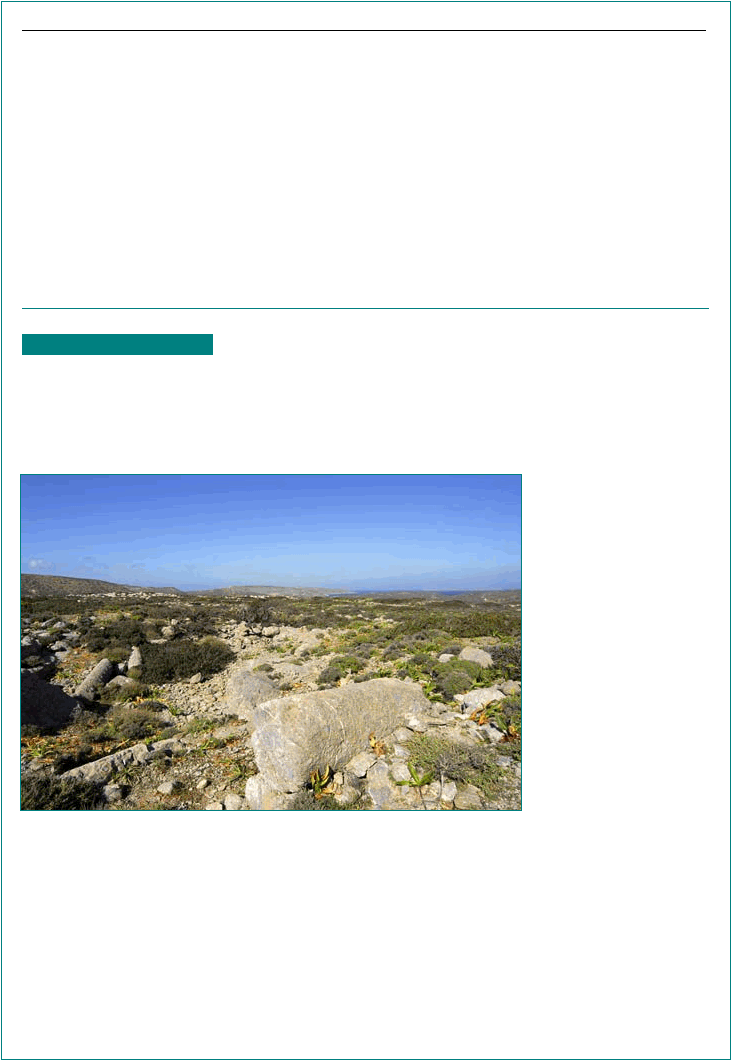
Digging each other’s (golf) hole
Cavo Sidero, Crete, Greece
The local community of Siteia
prefecture, in eastern Crete, is
rather sceptical over the
planned mega-development of
a golf resort in a more or less
pristine cape, a fifth of which
is recognised by the European
Union as a protected area
(Natura 2000), called Cavo
Sidero (Cape Iron). The area
borders Europe’s only
indigenous Palm forest, Vai, a
hippy favourite in the 1970s.
The two sides are led by local
environmentalists and the left
on the one side, and the
Church and the right wing, on
the other, with a high court
battle scheduled for the end of
2007.
The story goes all the way
back to the Ottoman Empire,
which ruled Crete until the start of the 20th century. At that time, the Ottoman Authorities donated all of the land of the
peninsula to the powerful Greek orthodox Monastery of Toplou. After protracted disputes with the greek state, the Monastery
managed to keep most of the land apart from a section considered a state forest, and set up a foundation to manage it, so that it
could also avoid a new law that would nationalise 30% of Monastery land.
In 1995, two years after the death of the first
president of the foundation in a car accident, the foundation decided to offer a long-80 year lease to a previously unknown UK
investors group to develop the peninsula (26 square km – 4 times the size of Gibraltar) as a huge golfing, resort, vila & marina
complex, (7,000 rooms, 5 “villages”/small towns, 3 golf courts covering 80 hectares in total) in return for 10% of the gross
annual revenues. The total investment is estimated at Euros 1.2 billion. The investors only received official approval of the
environmental impact study in February 2007, after 11 years of trying. After 2004, the project was seen favourably by the new
conservative, pro-business and pro-golf government (the vice-minister of finance also heading the greek golf association).
Now you see it, now you golf…